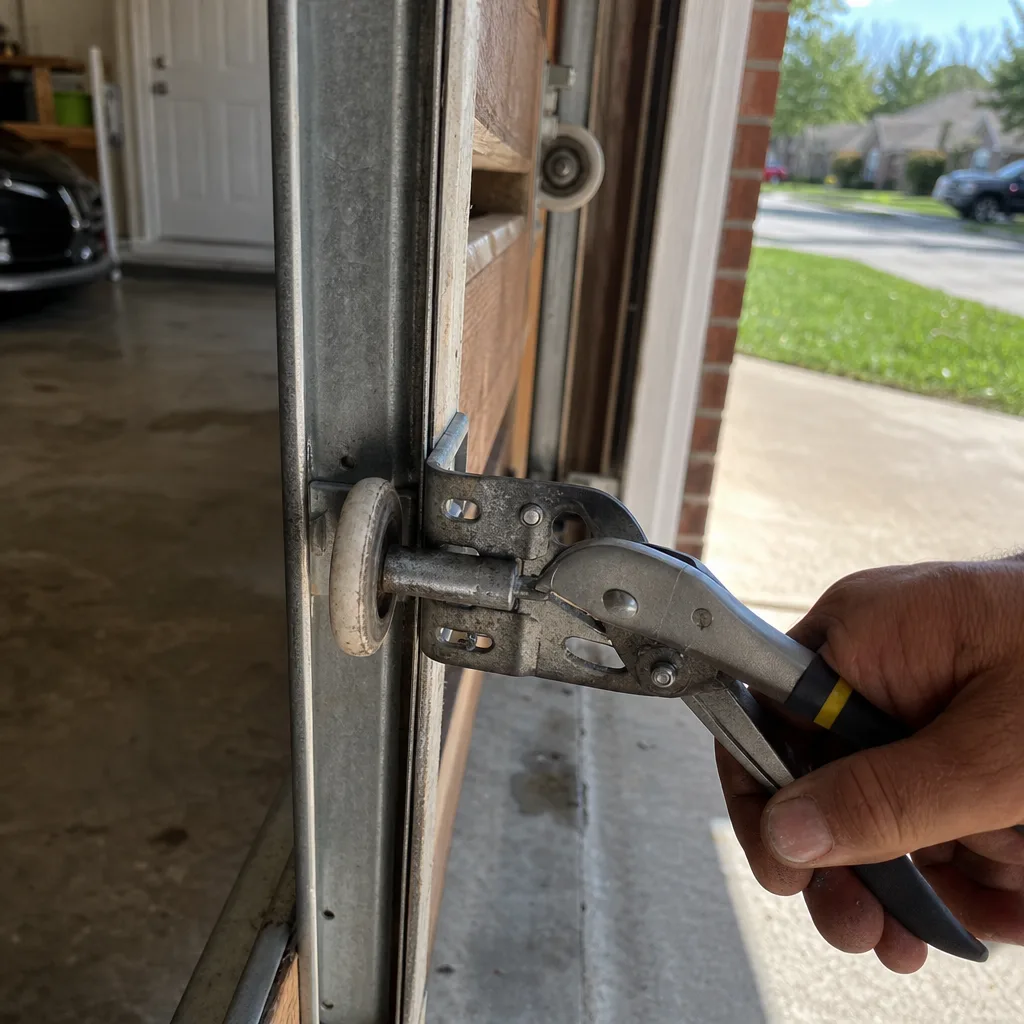
Last updated November 21, 2026
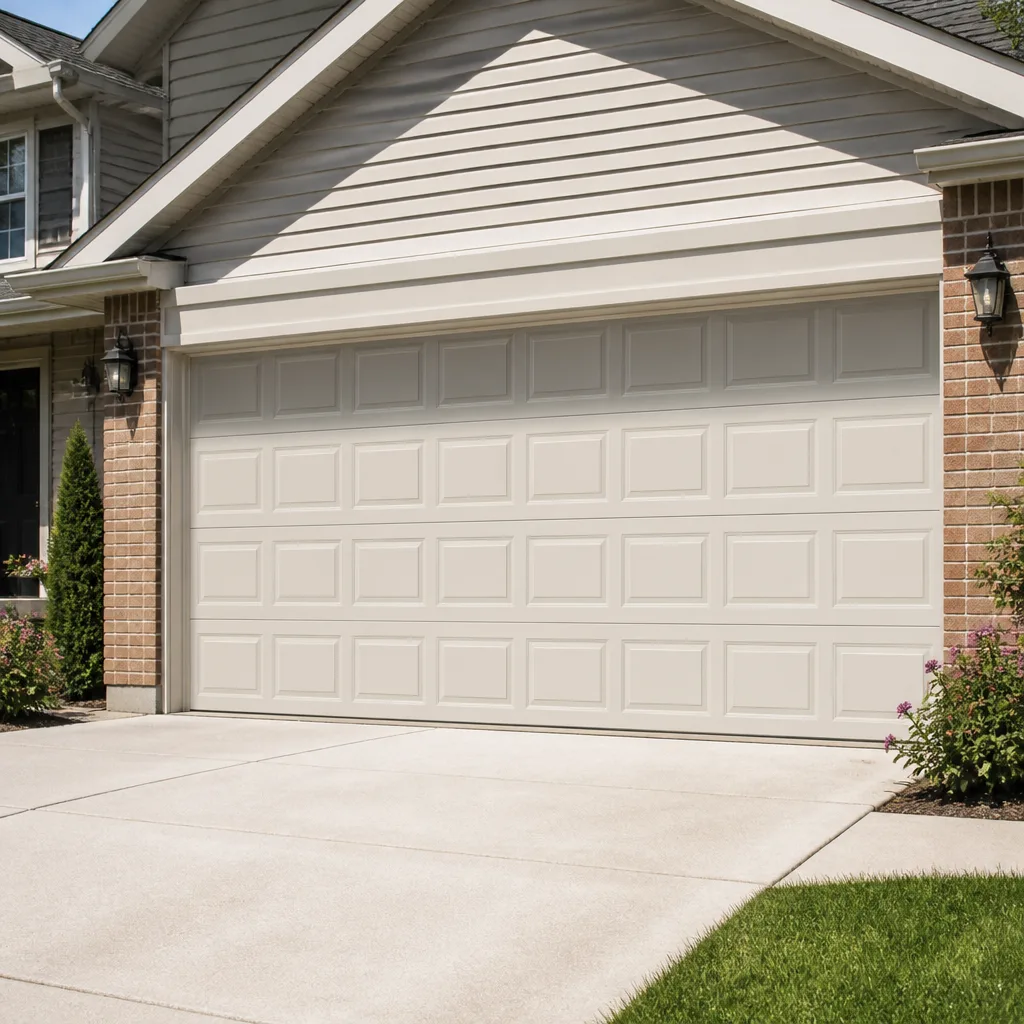 Raised-panel steel
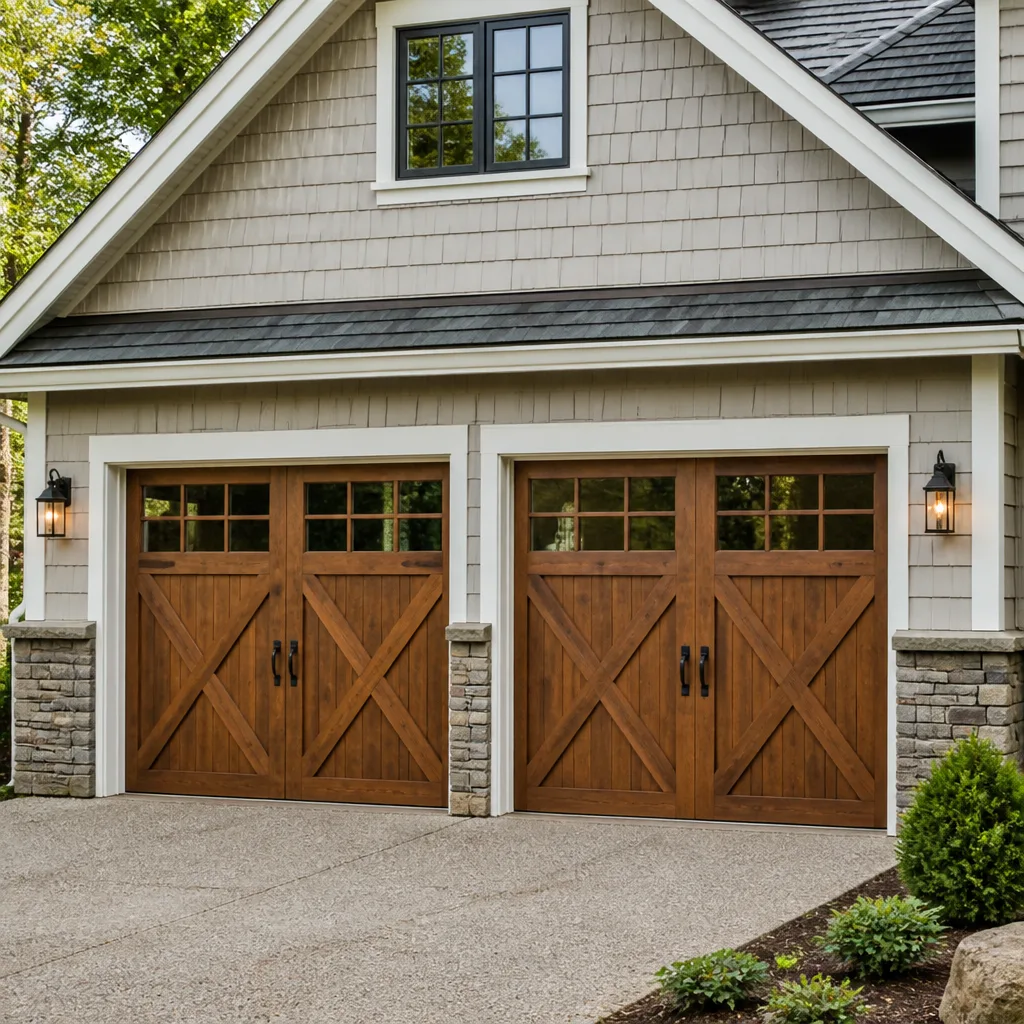 Carriage house
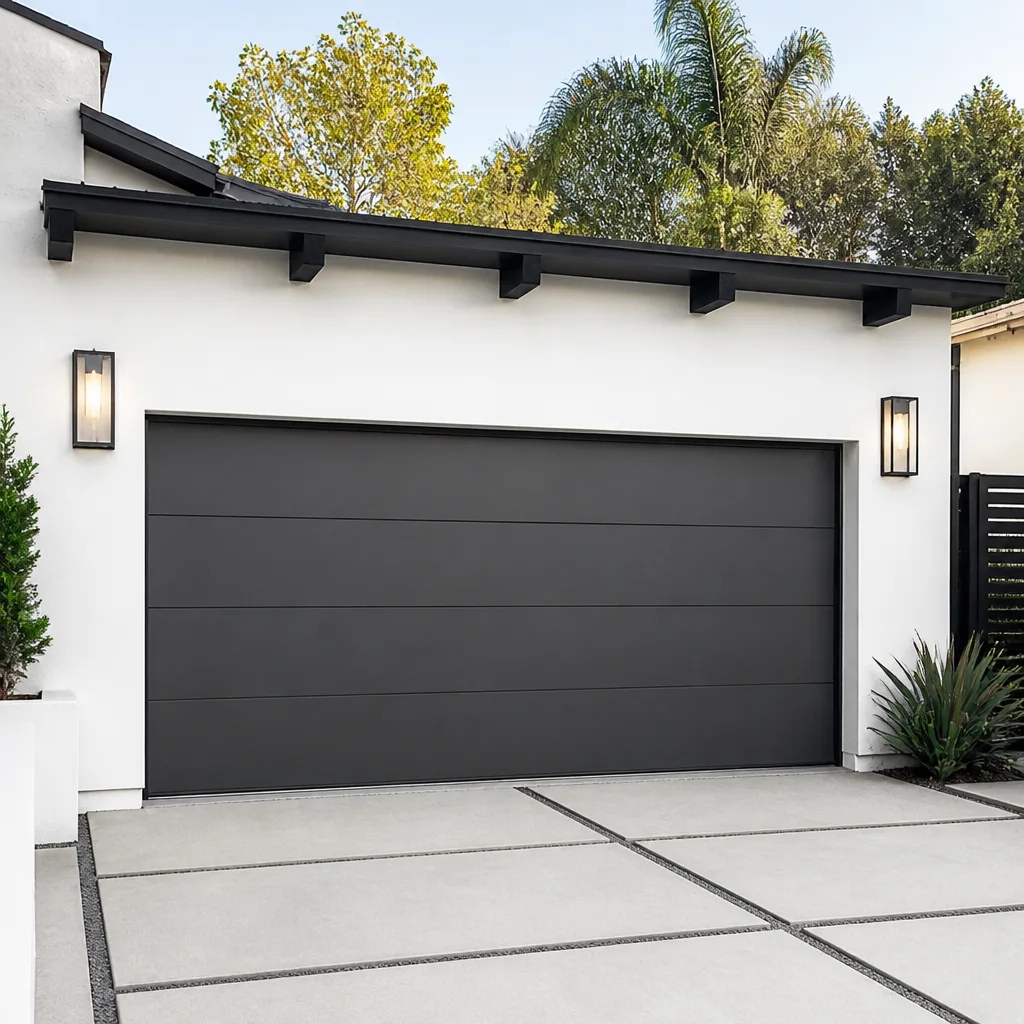 Modern flush
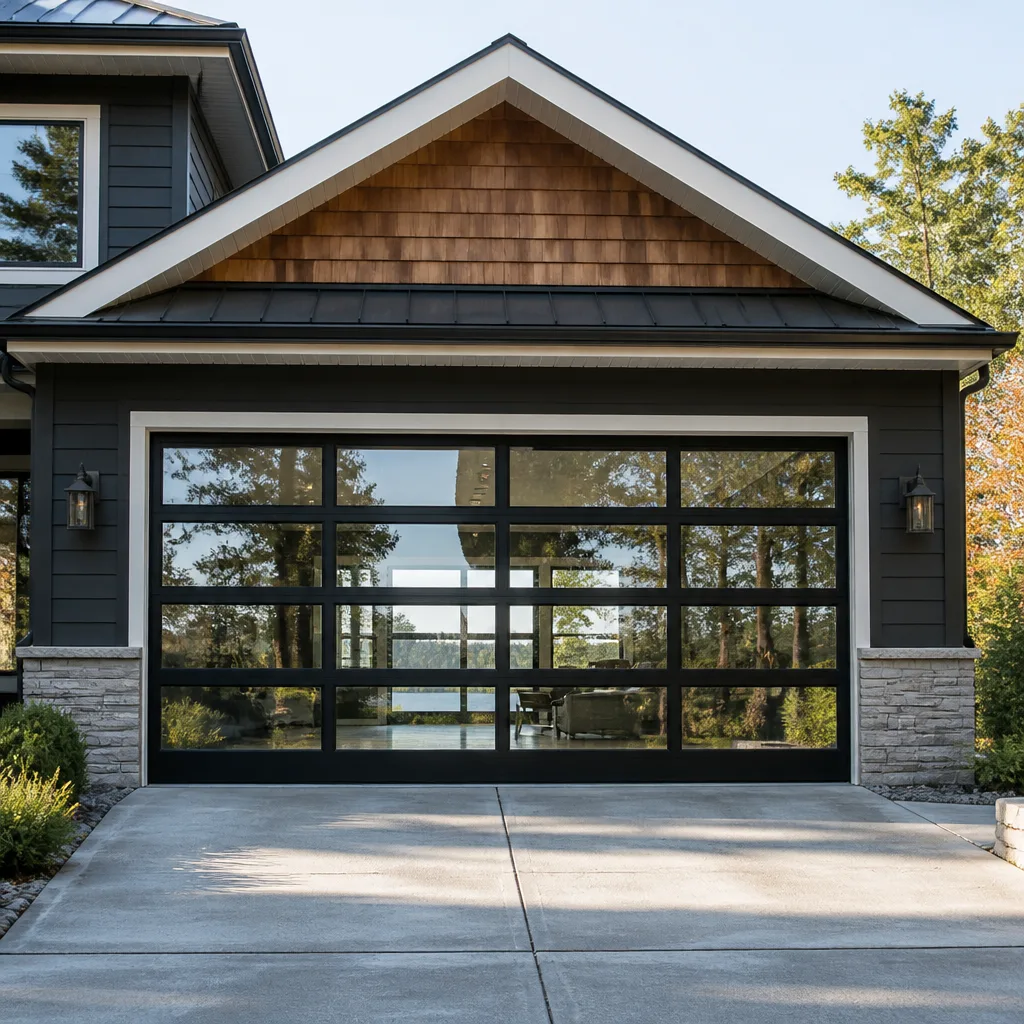 Full-view glass
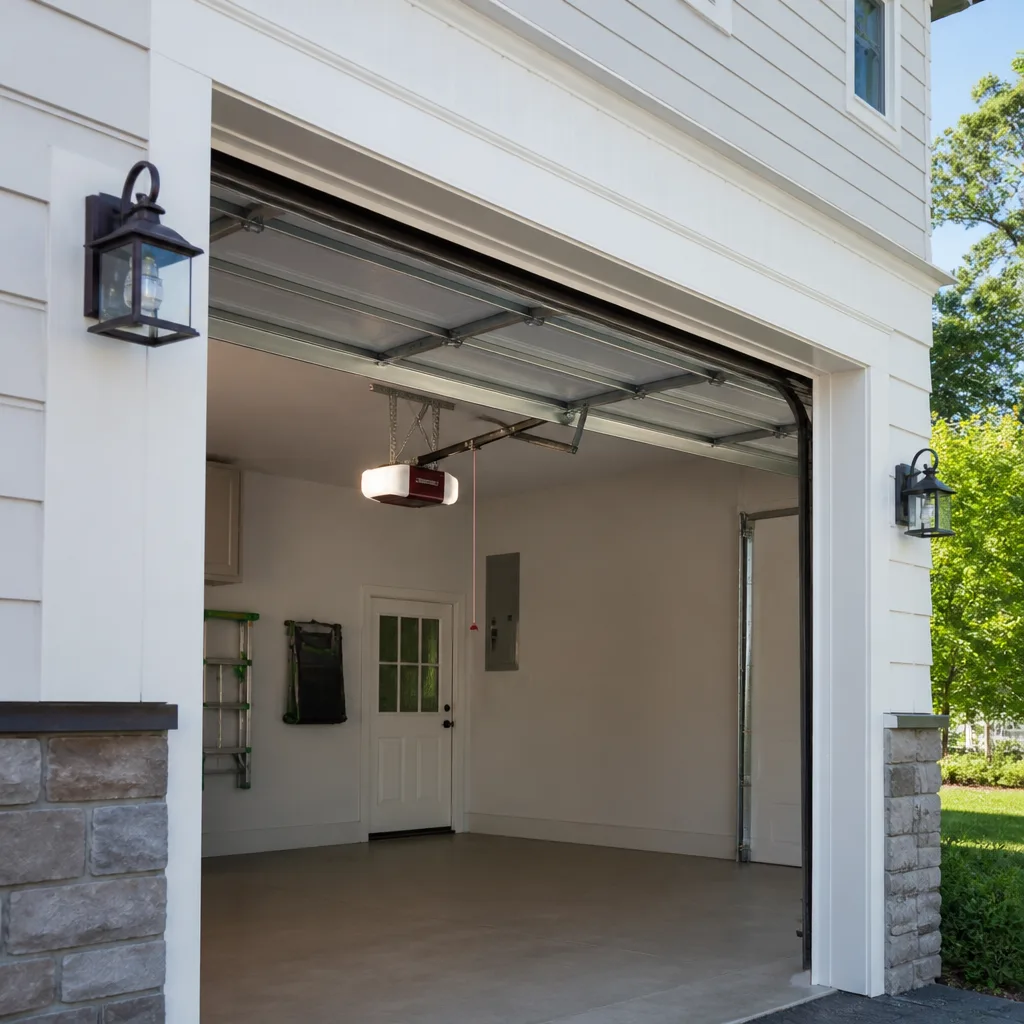 LiftMaster openers
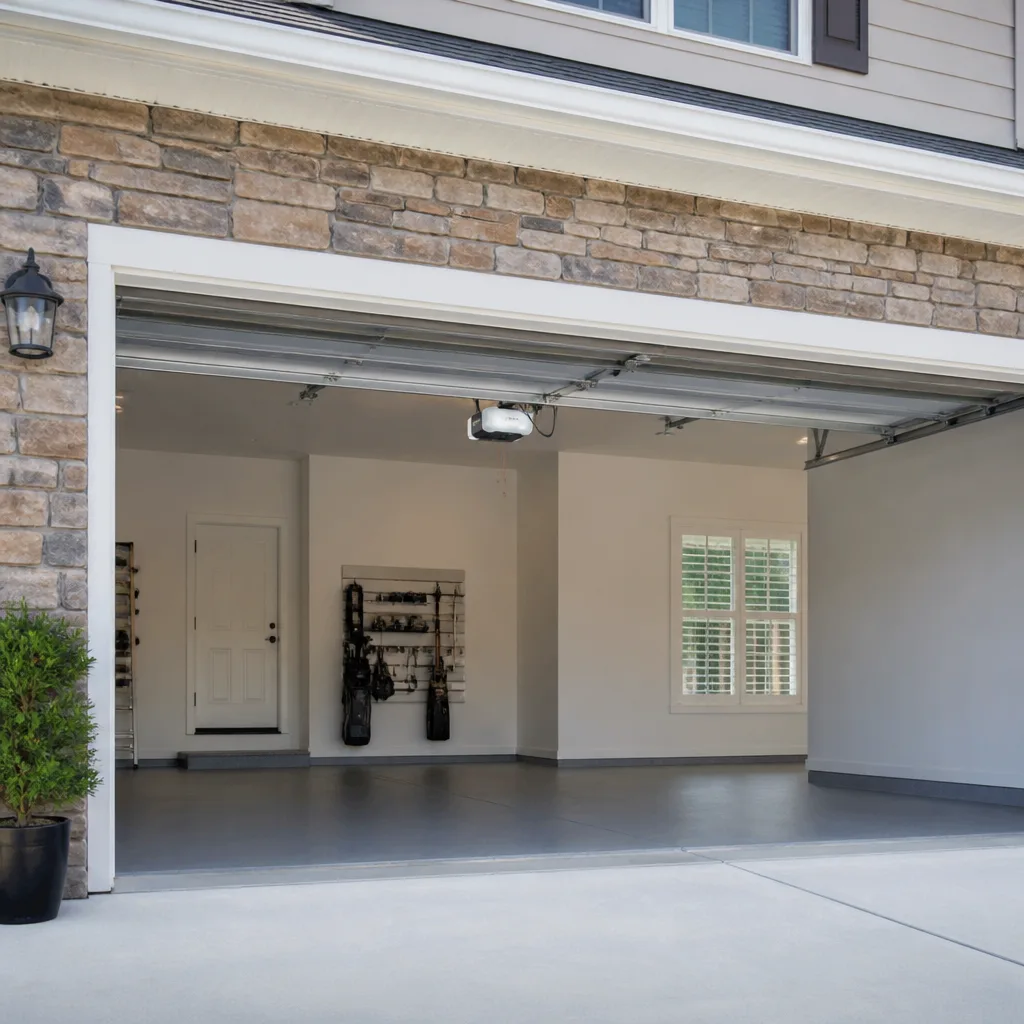 Chamberlain openers
Full 25-point door and opener safety check with every visit - springs, cables, rollers, tracks, and your LiftMaster or Chamberlain opener included
You get a price before we start. It does not change when the pro arrives.
Get your free estimateGarage Door Warning Signs: A Clear Lake Homeowner’s Reference Guide
A garage door doesn’t snap a torsion spring without warning. There are almost always three to five detectable symptoms in the weeks before it fails, and most homeowners dismiss every one of them as “just how it sounds now.” That’s the expensive mistake. By the time a door won’t open, you’re not choosing between a tune-up and a repair anymore. You’re choosing between a repair and a full replacement, often on a morning when you need to leave. This guide is for Clear Lake homeowners who want to catch the early tier of warning signs, the ones that show up two to six weeks ahead of a breakdown, while the fix is still small. You’ll learn how to read the sounds, the slow side, the rust, and the intermittent opener behavior that most treat as background noise.
Quick Answer
The most important garage door warning signs in Clear Lake are the quiet ones: uneven movement on one side, a grinding or scraping sound that wasn’t there before, rust streaks concentrated in one spot on a spring, and an opener that works “sometimes.” These show up weeks before a spring breaks or a cable fails. Symptoms like a snapped spring, a door stuck half-open, or a cable hanging loose are the late stage, not the early one.
Styles & brands we work with
- Raised-panel steel
- Carriage house
- Modern flush
- Full-view glass
- LiftMaster openers
- Chamberlain openers
Table of Contents
- What Your Door’s Sound Is Telling You
- Why One Side of the Door Moves Slower
- Reading Rust on Springs: Surface Oxidation vs. Imminent Failure
- Intermittent Opener Behavior (It’s Rarely the Opener)
- The Two-Week Decision Window
- Brand-Specific Warning Signs Worth Knowing
- A Visual Walk-Around Checklist for Clear Lake Homes
- When to Call a Professional
What Your Door’s Sound Is Telling You
Your garage door has a baseline sound, and it’s been stable for years. When that baseline shifts, something in the mechanical system has changed. The trick is that different parts produce different sounds, and each sound points to a different fix. Learning to tell them apart is the single most useful diagnostic skill a homeowner can develop, because it tells you which job you’re scheduling before anyone arrives.
Here’s the plain-language sound profile we walk Clear Lake homeowners through:
- Grinding or metal-on-metal scraping: usually a worn roller, a dry hinge, or a torsion tube rubbing where it shouldn’t. Often the cheapest fix in this list.
- Popping or snapping, especially on the lift: a cable fraying in its drum, or worn hinge plates under load. The cable is the part you don’t ignore.
- Loud bang followed by silence at the top of travel: a spring that just released tension, which is a late-stage event, not an early sign.
- Creaking or groaning under load: often a sign of a spring losing tension gradually, or panel joints shifting.
- Squealing on the tracks: rollers that are dried out or wheels that are worn flat on one edge.
- Whining from the opener: gear or motor wear, unrelated to the door mechanics.
- Rhythmic clicking that tracks door speed: a piece of hardware that’s come loose and is knocking as the door passes.
The distinction that matters most: a cable fraying has a sharper, higher-pitched scraping that comes and goes with door position. A worn roller has a lower, consistent grind that ticks over as each roller passes the curved track. Springs losing tension don’t usually make a sound at all until they fail, which is why visual checks matter so much. In our experience working Clear Lake garages, a door that “suddenly got loud” almost always has a fixable hardware issue that a homeowner could have scheduled two weeks earlier.
Why One Side of the Door Moves Slower
When a garage door rises at a visible tilt instead of straight up, that’s not a speed setting and it’s not normal wear. It’s an alignment issue, and it’ll get worse. In a torsion-spring system (the type most Clear Lake homes with two-car garages have), the two springs on the center tube should be lifting the door evenly. A door that lags on one side means one of several things has happened:
- One spring has lost tension. The two springs age together, but one can lose coil tension faster. The result is a door that lifts heavier on one side.
- A cable has stretched or slipped a drum wrap. The cable controls how much lift that side gets. If it’s off by even a quarter-inch of wrap, the door lifts cocked.
- A track has been nudged out of plumb. Thermal expansion, a bump from a car mirror, or foundation movement in older Clear Lake slabs can all shift a vertical track a fraction of an inch.
- A hinge plate is bent or a roller is seized. A single stuck roller creates drag on one side of the door.
Here’s the reason to take it seriously: a door lifting unevenly loads the torsion tube asymmetrically. That extra load accelerates spring fatigue on the strong side and eventually causes the same symptom on the other. Left unaddressed, a lagging door commonly ends in a snapped spring, a popped cable, or both. And it strains the opener motor, which is usually the part a homeowner blames first when the door stops working. If your garage door in Clear Lake lifts at an angle, that’s a garage door repair job, not a maintenance item. Have it checked before it becomes a spring replacement too.
Reading Rust on Springs: Surface Oxidation vs. Imminent Failure
Not all rust on a garage door spring is a warning. Springs are oil-tempered steel, and given the humid air Clear Lake sits in most of the year, some surface bloom is normal. The distinction is where the rust concentrates and what it looks like. Here’s how we sort the two:
- Fine, even dusting of tan oxide across the whole spring: normal surface oxidation. Doesn’t shorten spring life in any meaningful way.
- Isolated “bloom” patches near the coils, especially where the spring meets the winding cone: early-to-mid failure. Rust is chasing a stress point. Have it checked.
- Pitting or flaking near the center of the spring body: advanced. The spring is losing cross-section, and the failure point is closer than you’d think.
- Orange streaks running down the shaft tube: a sign the spring has been losing material and shedding rust over time. Worth a call.
- Fresh rust appearing on a colored or painted spring surface: the paint has failed and the steel underneath is exposed. The clock has started.
The other tell is the “oil can” sound or a visible bend in the spring coil pattern when you look straight down the length of the tube. A spring that’s starting to sag along its axis is near the end of its fatigue life. Springs are one of the most dangerous components in any garage door system: the torsion spring on a typical two-car door holds hundreds of pounds of stored energy, and it releases instantly. We handle them right, with proper winding bars and the correct technique, which is precisely why this is a trained-technician job and never a homeowner one. In our experience, rust that’s concentrated rather than uniform is the clearest visual early-warning sign in Clear Lake garages.
Intermittent Opener Behavior (It’s Rarely the Opener)
An opener that “works sometimes” almost never has an opener problem. Nine times out of ten, the door mechanics are binding just enough that the opener’s force setting occasionally trips, or an alignment issue causes the safety sensors or the travel limits to misread position. The opener is doing its job: it’s trying to lift a door that’s fighting back, and it’s stopping to protect its motor.
What intermittent behavior usually traces back to:
- Binding in the tracks: the door drags through the curve of the horizontal track, the opener’s torque sensor reads excess current, and the door reverses or stops. Clean the tracks and the “opener issue” often disappears.
- A failing wall button or remote battery: if the wall button works and the remote doesn’t, that’s a remote problem. If both are intermittent, suspect the mechanics.
- Misaligned safety sensors: sun glare, a bumped sensor frame, or a slight shift in the bracket can cause intermittent auto-reverse.
- Worn gears inside the opener: mostly LiftMaster and Chamberlain chain drives over a decade old, where the plastic gear inside the motor housing wears. In that case the opener is the culprit.
- Travel limit drift: the opener’s travel limits move out of spec over time, causing the door to stop short or reverse near the top.
We work on LiftMaster, Chamberlain, Genie, Craftsman, and the other major opener brands, so we can usually tell in a few minutes whether the fix is an opener adjustment or a door-mechanics repair. If you’ve already tried the battery swap and it didn’t help, garage door opener repair is the right service to schedule.
The Two-Week Decision Window
The garage door service industry has a clear split between “schedule this in the next two weeks” and “call today.” The reason the two-week window matters is simple: repairs done in that window almost always cost less than repairs done after a failure, because the failed part brings sister parts with it. A weak spring that finally snaps can pop a cable, bend a hinge plate, and strain the opener motor in one event.
Symptoms that fit the schedule-in-two-weeks tier:
- One visible rust patch on a spring, but the door still lifts evenly.
- A single new sound that’s been consistent for a few days (grinding, squealing).
- Door that lifts slightly unevenly but still travels all the way up.
- Intermittent opener reversal on occasional mornings.
- Rattle on a specific panel or hinge that started recently.
Symptoms that mean call today, not next week:
- Visible sag or bend along the length of a torsion spring.
- Door tilting more than an inch out of level on its way up.
- Cable visibly frayed, curled, or off its drum.
- Door reverses automatically without obstruction.
- Loud bang at the top of travel followed by free-fall on the lift.
- Any visible crack in a panel, especially a hairline crack that’s grown.
Same-day attention on the second tier is what keeps a $200 – $400 fix from becoming a $900+ multi-component repair. Note that same-day service applies to repairs and emergency calls only; a new door or full replacement is measured, ordered, and scheduled, so garage door installation pricing is a separate conversation. On repair and emergency topics, call (833) 508-9162 and we’ll either get you on today’s schedule or confirm the earliest day that fits.
Here’s roughly what the tiers cost in the Clear Lake market, as estimates only:
| Repair | Typical Estimate |
|---|---|
| Single torsion spring replacement | $180 – $340 (per spring) |
| Matched pair of torsion springs | $320 – $600 |
| Single cable replacement | $150 – $300 |
| Roller replacement (set of 10) | $110 – $220 |
| Opener gear/limit adjustment | $95 – $200 |
| Panel or hinge repair (single) | $150 – $350 |
All prices are estimates only. The written estimate we give you before any work begins is the final price, and it’s what you agree to before we start. There is no surprise invoice at the end.
Brand-Specific Warning Signs Worth Knowing
Different door systems develop different early warnings, and knowing your brand’s pattern can save you a service call. We work on Amarr, Wayne Dalton, Craftsman, Raynor, LiftMaster, Chamberlain, Genie, and Clopay, so we’ve watched how each system ages. A few patterns stand out:
- Wayne Dalton doors with the TorqueMaster spring system often show early warning through uneven tension in the closed position rather than through visible rust. The spring housing is enclosed, so rust isn’t your visual check; sound and level are.
- Amarr sectional doors commonly show hinge looseness as a slight rattle that comes and goes with door position. Left alone, a single loose hinge plate can bind the horizontal track.
- Craftsman opener systems (often paired with a LiftMaster-designed head unit) are prone to travel-limit drift over time. If your Craftsman door stops short only some days, travel limits are your first suspect, not the motor.
- Raynor doors, especially older sectional models, often develop panel joist fatigue along the bottom section first, visible as a slight bow when the door is fully closed and you sight along the bottom edge.
None of these are “bad” brands. They’re patterns that tell us where to look first when a homeowner calls with a specific symptom on a specific brand. Knowing your brand means we’re not starting from zero when we arrive.
A Visual Walk-Around Checklist for Clear Lake Homes
Five minutes with a flashlight, once a month, catches most of the early-tier signs before they become late-tier bills. Do the walk-around from outside with the door closed, then again from inside with the door raised. Here’s what to look at, in order:
- Look along the springs. Sight down the length of the torsion tube. Any visible sag, bend, or new concentrated rust patch is a flag.
- Look at the cables. Each cable runs from the bottom corner of the door to a drum near the spring. Frayed strands, a kink, or a cable that’s riding unevenly in the drum is a flag.
- Look at the rollers. Each roller should sit cleanly in the track. A roller that’s riding at an angle, or has a visible flat spot on one edge, is a flag.
- Look at the hinges. Run a hand along each hinge plate (door down, opener off). Any wobble or play is a flag.
- Look at the tracks. Vertical tracks should be plumb and parallel. Horizontal tracks should be level. Any dent, bend, or bow is a flag.
- Look at the bottom seal. A seal that’s torn, hanging, or pressed flat against the floor isn’t a failure risk, but it’s a cheap fix that prevents water from getting into the frame.
- Run the door and listen. One full cycle up and one down, listening for any sound that wasn’t there last month.
If anything on this list flags, don’t adjust anything on the springs, cables, or bottom brackets yourself. Those parts are under constant stored tension and can cause serious injury in a fraction of a second. Note the symptom and call a trained professional. Everything else on this list is safe to observe, and observation is the whole point. A Clear Lake garage door tends to age a little faster than the national average simply because of year-round humidity, so a monthly walk-around pays off here.
See the difference
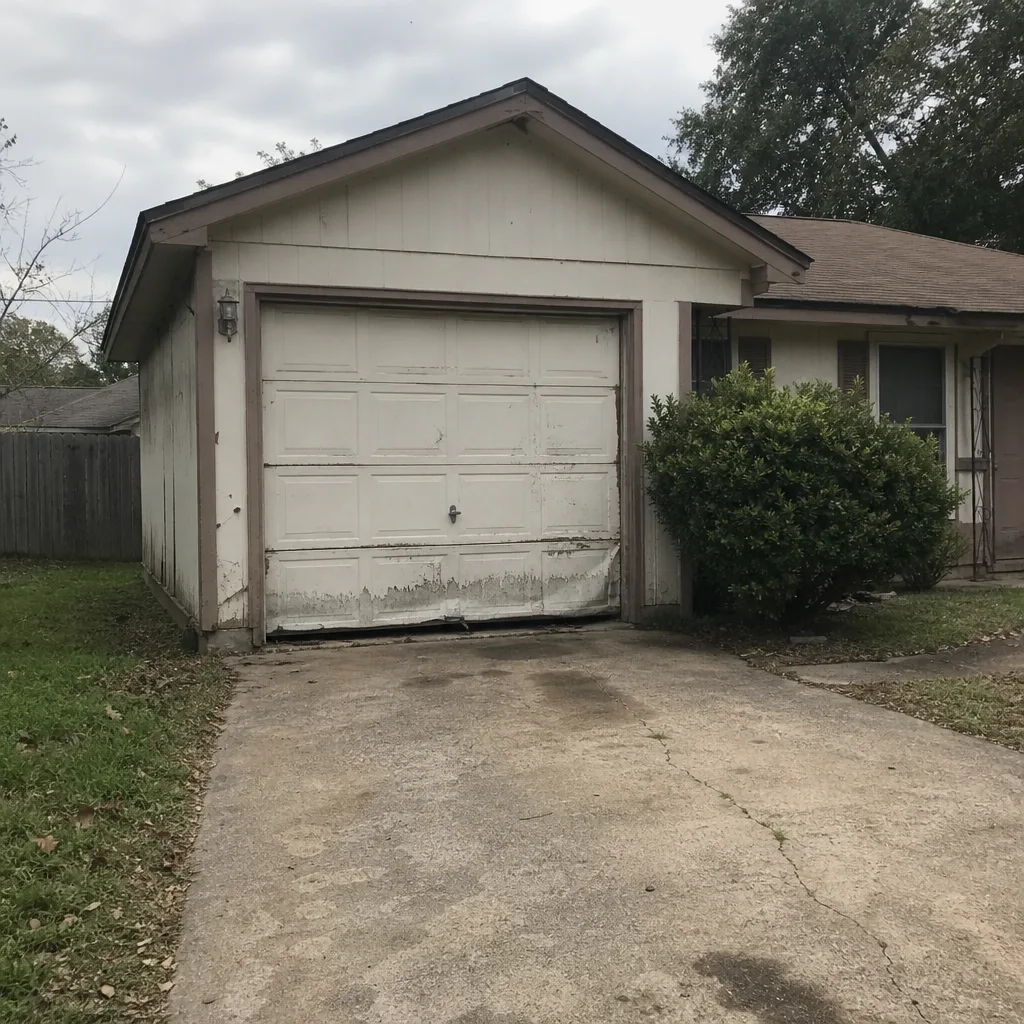 Before
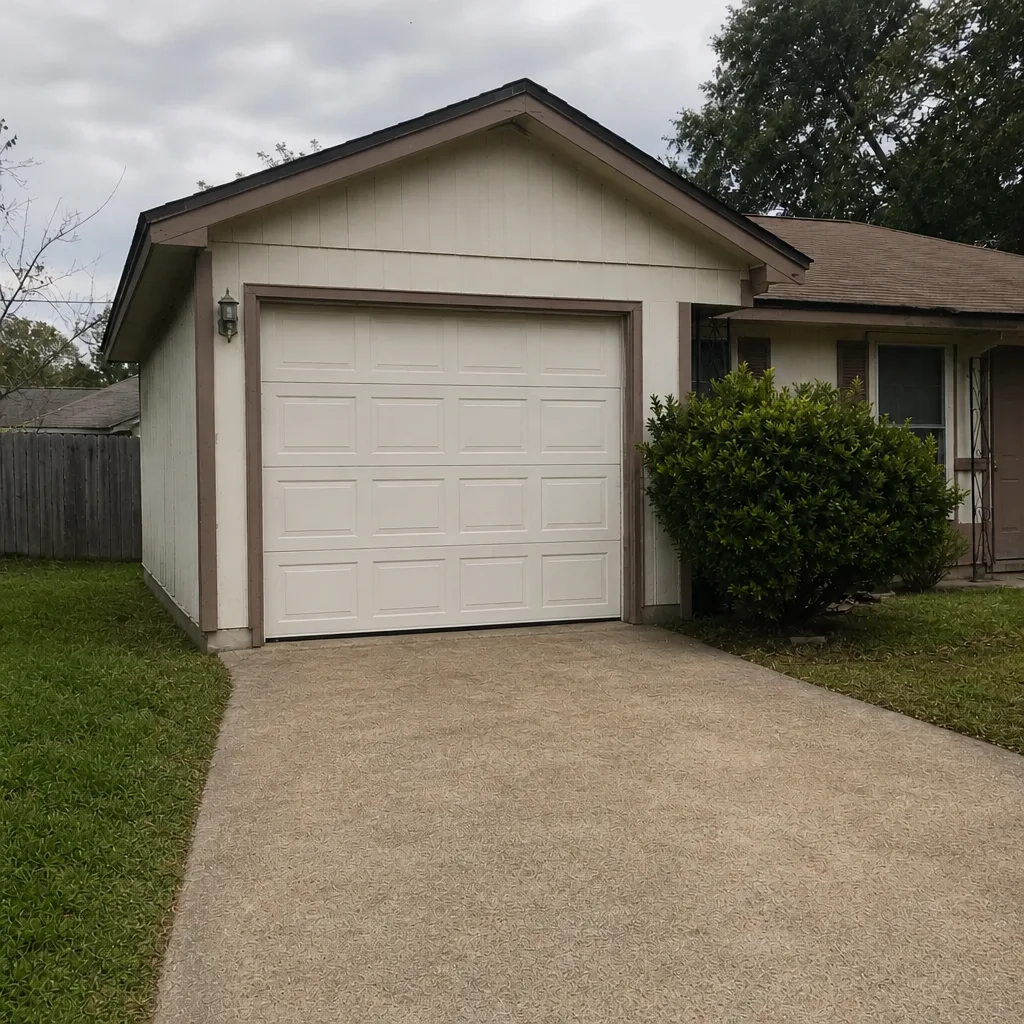 After
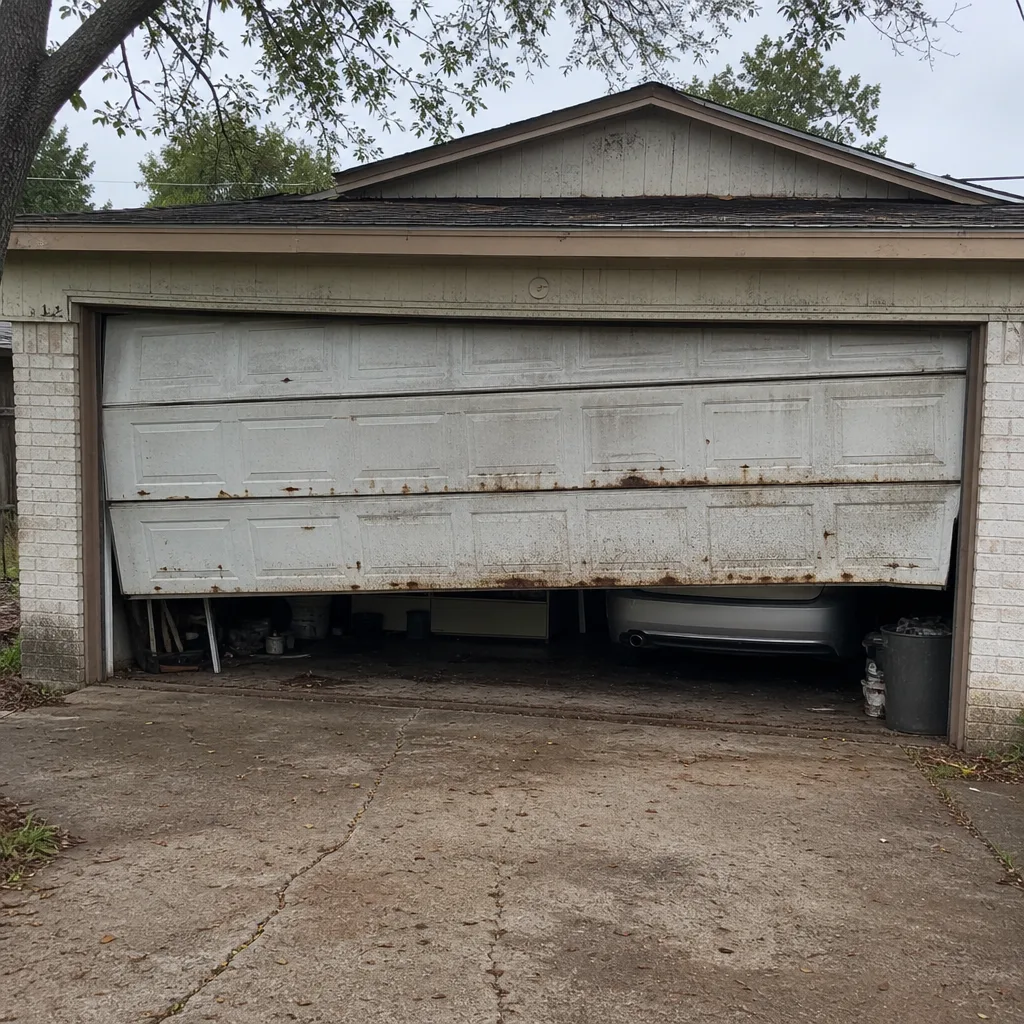 Before
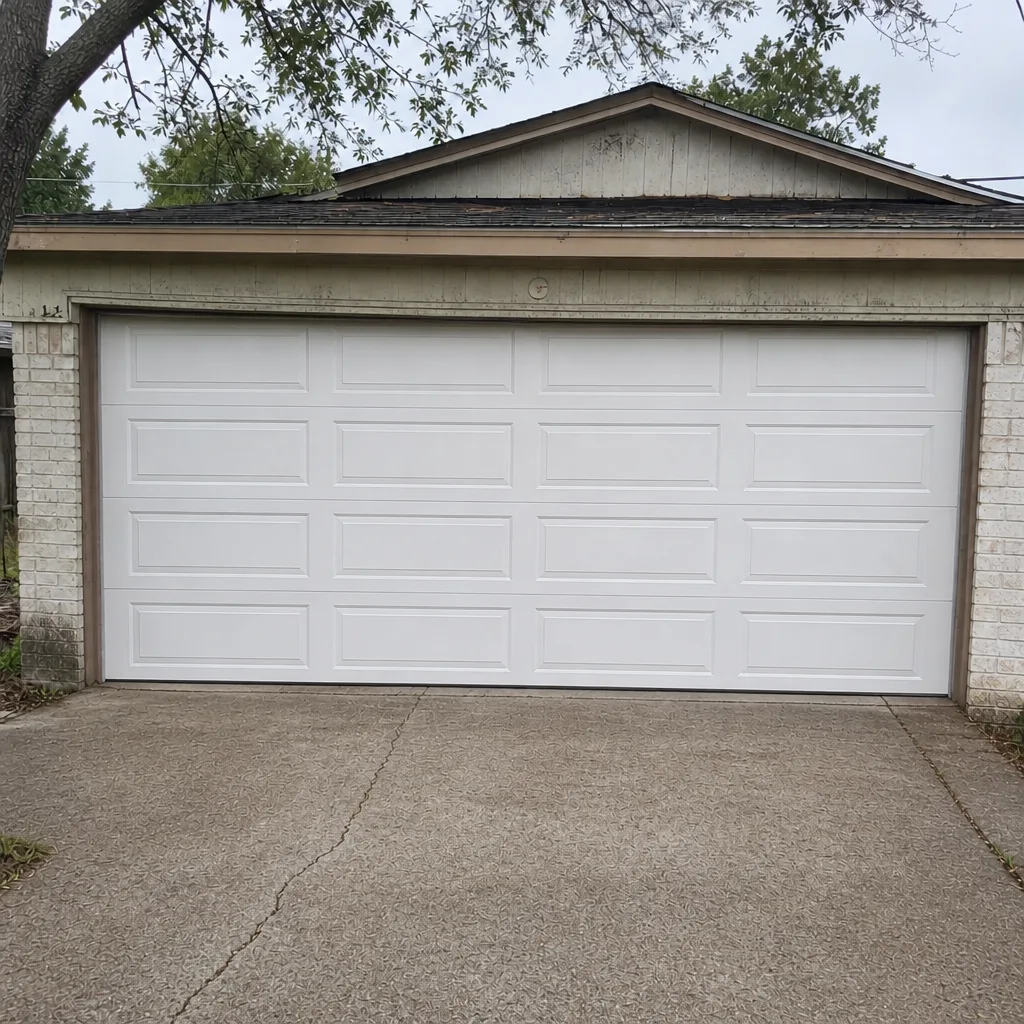 After
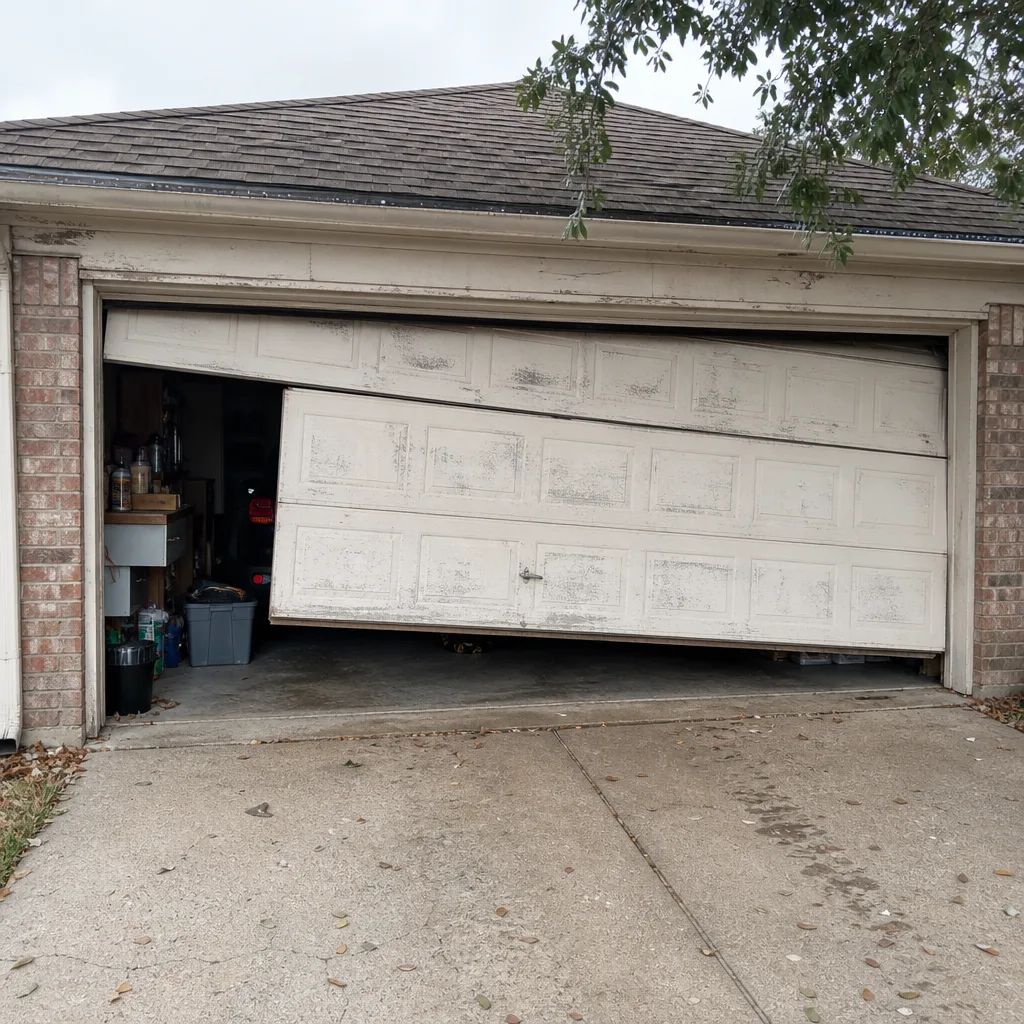 Before
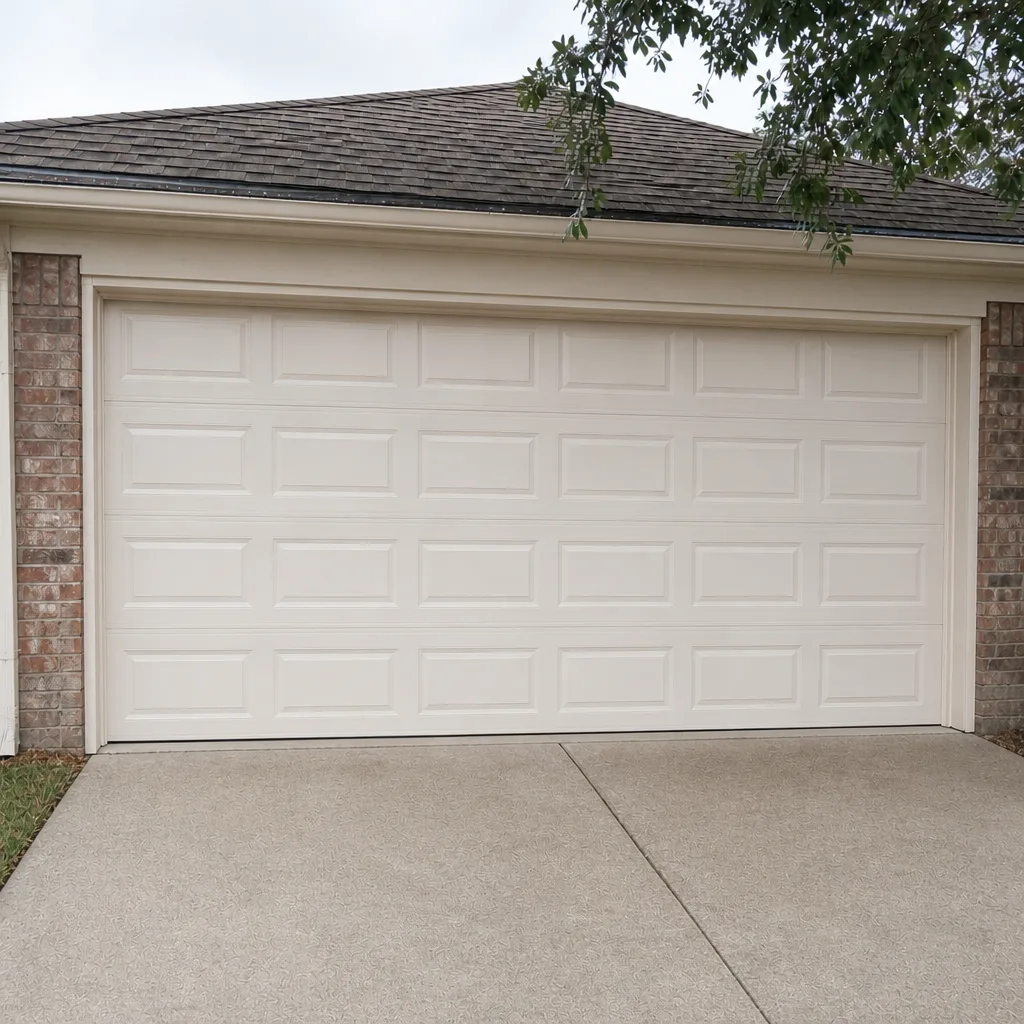 After
Common Mistakes to Avoid
- Waiting for a “real” problem before calling. A garage door rarely goes from fine to broken in a day. The two-week window is where the savings live, and most Clear Lake homeowners miss it because they’ve normalized the noise.
- Spraying springs or winding cones with lubricant. Springs don’t need lubrication, and grease on a spring can trap grit and hide the exact rust pattern you need to see. Lubricate rollers and hinges; leave springs alone.
- Adjusting the opener force setting to fix a binding door. If the opener trips, the answer is to fix the binding, not turn up the force limit. Cranked-up force settings are how doors get damaged and openers get burned out.
- Assuming a slow side is a setting, not a symptom. A door lifting unevenly is a structural alignment issue, and no setting fixes it. Every month it’s left unaddressed tightens the spring on the strong side.
- Calling a general handyman for a spring repair. Springs are the single most dangerous component on a residential garage door, and most general handymen won’t touch them. This is a specialist job, and skimping on it is how people get hurt.
- Ignoring a door that reverses in cold weather. Cooler mornings tighten the clearances in the tracks. If your door reverses only on cold mornings, treat it as a binding flag now, not a seasonal one-off.
- Buying a new opener when the door is the problem. Intermittent opener behavior is much more often a door-mechanics issue than an opener failure. Diagnose first, then replace, or you’ll own a new opener on a door that still fights it.
When to Call a Professional
Call a professional when any of the following are true: a torsion spring has visible rust concentrated at one spot, a door lifts noticeably out of level, a cable looks frayed or off its drum, an opener reverses without an obstruction, a door has started making a sound it didn’t make last month, or a specific panel has started to rattle or crack. Also call if you’ve owned the garage door for more than a few years and never had it inspected; springs and cables are wear items, and there’s a fatigue lifespan you can’t see. Clear Lake Garage Door Repair offers free estimates in Clear Lake. Call (833) 508-9162 and we’ll either schedule a non-urgent visit or get you same-day attention if the symptom warrants it. The written estimate we give you is what you agree to before any work begins.
Frequently Asked Questions
The most common early warning signs are uneven lifting, new grinding or scraping sounds, rust concentrated in one spot on a spring, intermittent opener reversal, and a specific panel or hinge that’s started to rattle. These show up two to six weeks before a catastrophic failure, and each one points to a specific fix. Call (833) 508-9162 for an exact quote; estimates are free.
Garage door spring repair in Clear Lake typically runs $180 – $340 for a single torsion spring, and $320 – $600 for a matched pair, which is the standard replacement set. Cables, rollers, and hinge repairs are lower, generally $95 – $350 depending on the part. These are estimates; the written estimate we give you is the final price, and it’s what you agree to before we begin. Call (833) 508-9162 for an exact quote.
For repair and emergency calls, we often can. Same-day repair service is available for stuck doors, snapped springs, and similar situations, with fast dispatch from 7am to 7pm. New doors and full replacements are a different service: those are measured, ordered, and scheduled. Call (833) 508-9162 and we’ll confirm what’s possible today.
No. The estimate we give you before any work starts is the price you pay. We quote based on the symptoms you describe and confirm with a quick inspection when we arrive, and if the actual repair differs from the estimate, we’ll tell you before touching the door. You won’t get an invoice bigger than the quote. Call (833) 508-9162 to schedule a free estimate.
The local pro who handles your job is licensed and insured as the state of Texas requires. Our technicians have up to 9 years of experience, and they’re trained on the brand already in your garage, whether that’s Amarr, Wayne Dalton, Craftsman, Raynor, or any of the other major systems. Call (833) 508-9162 to discuss your door.
If the sound is genuinely new, it’s a sign. Garage door mechanics don’t “settle in” to a new noise; they wear into it, and the sound is the mechanism telling you which part is changing. Compare this month’s sound to what the door sounded like six months ago. If it’s different, it’s worth a free estimate from Clear Lake Garage Door Repair. Call (833) 508-9162.
The Bottom Line
The early-warning tier of garage door symptoms – new sounds, uneven lifting, concentrated rust, intermittent opener behavior, loose hinges – is where homeowners save the most money and avoid the worst mornings. Late-tier symptoms like snapped springs and stuck doors are the visible end of a process that started weeks earlier. If you live in Clear Lake and your door has started telling you something, listen. A free estimate is the cheapest way to find out whether it’s a $150 adjustment or a $400 spring, and it’s the difference between scheduling on your terms and calling from your driveway when it’s already broken. Call (833) 508-9162 for a free estimate today.
Written by the team at Clear Lake Garage Door Repair.