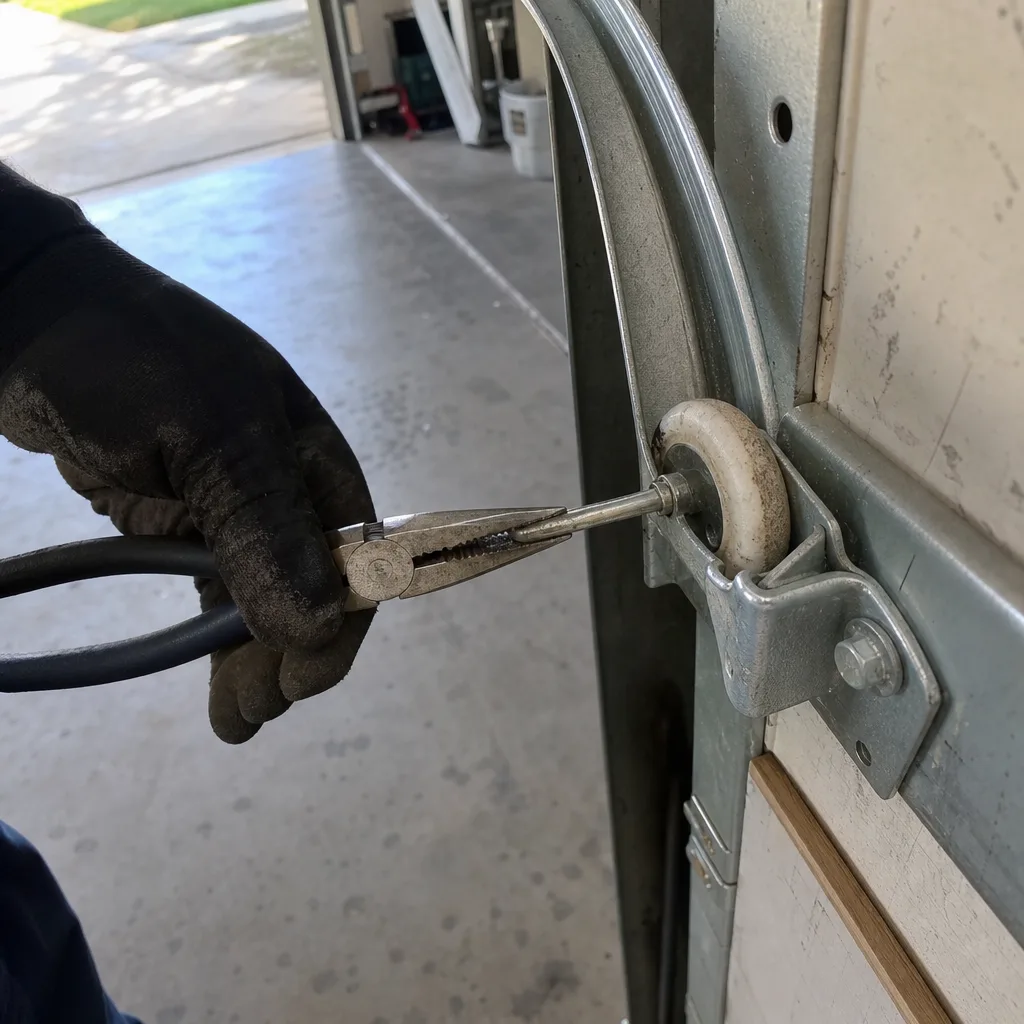
Last updated November 21, 2026
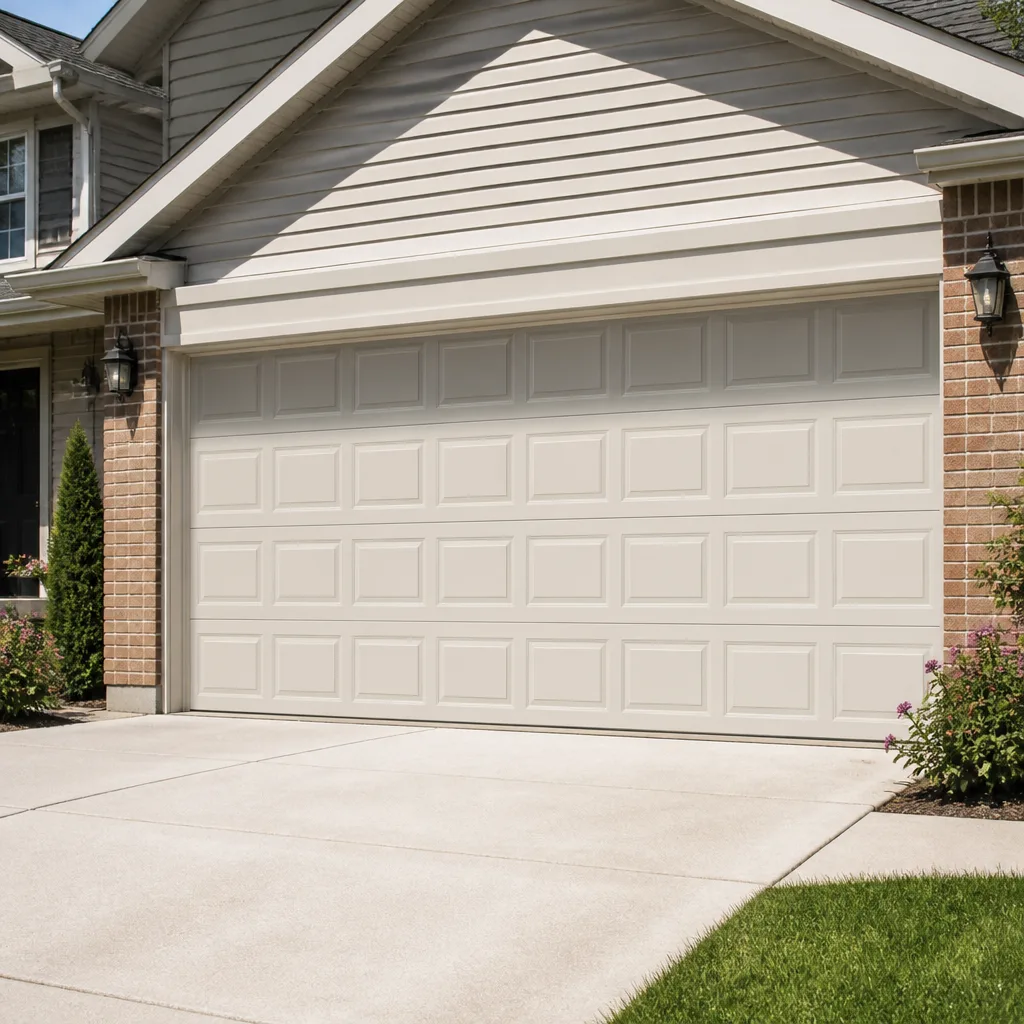 Raised-panel steel
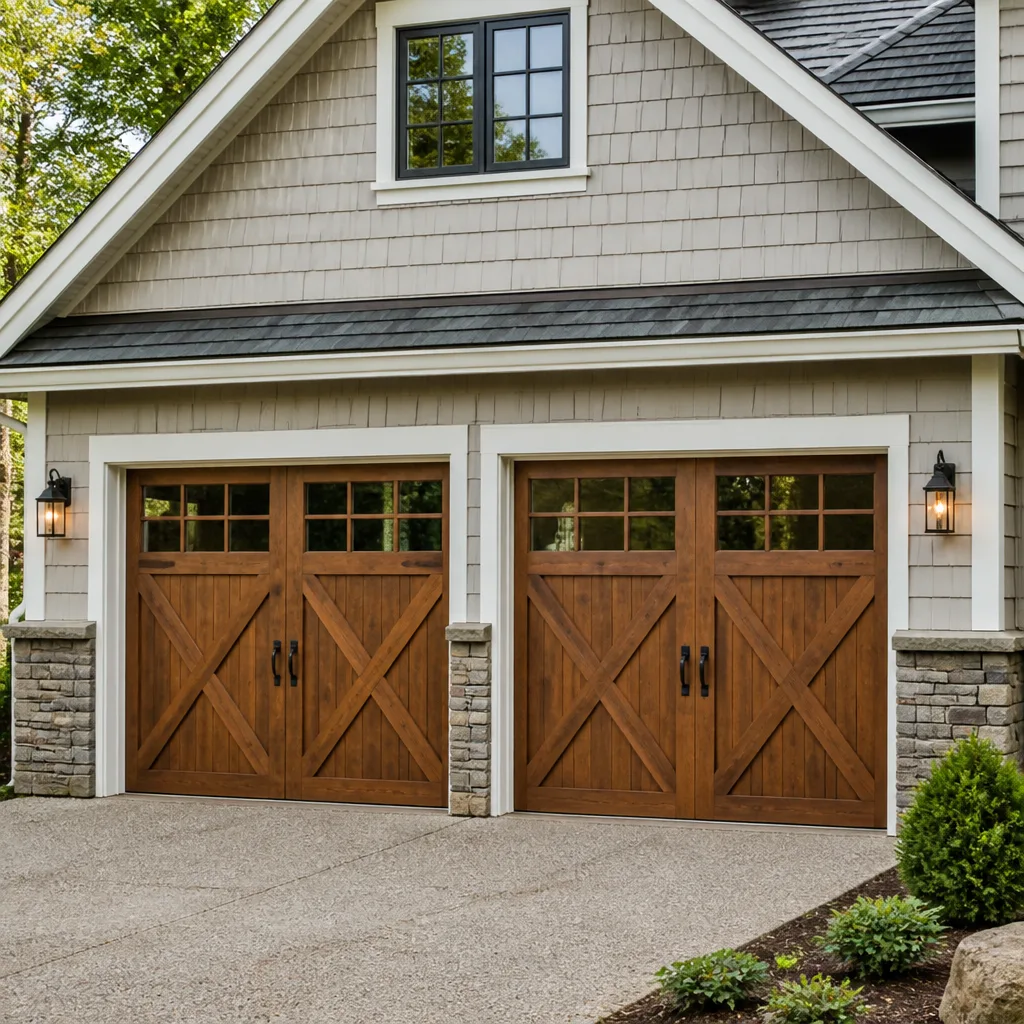 Carriage house
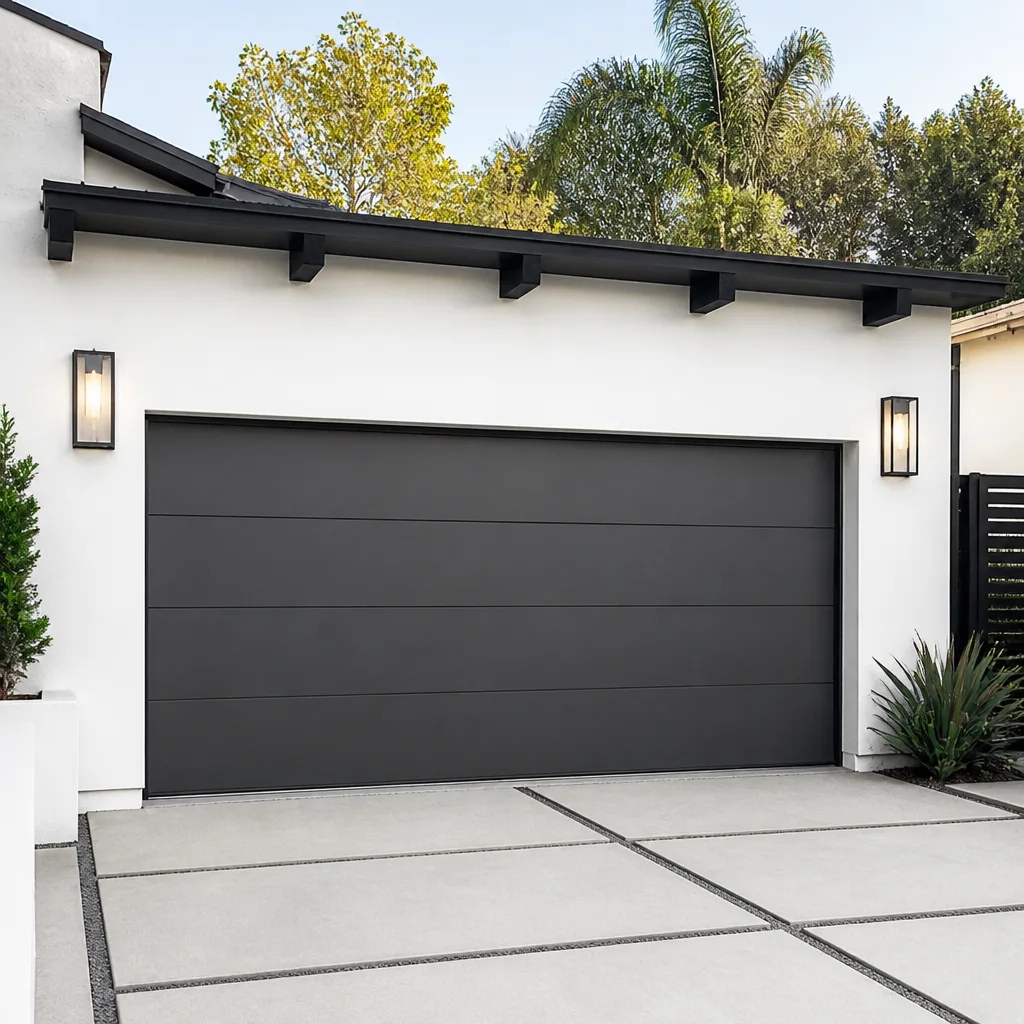 Modern flush
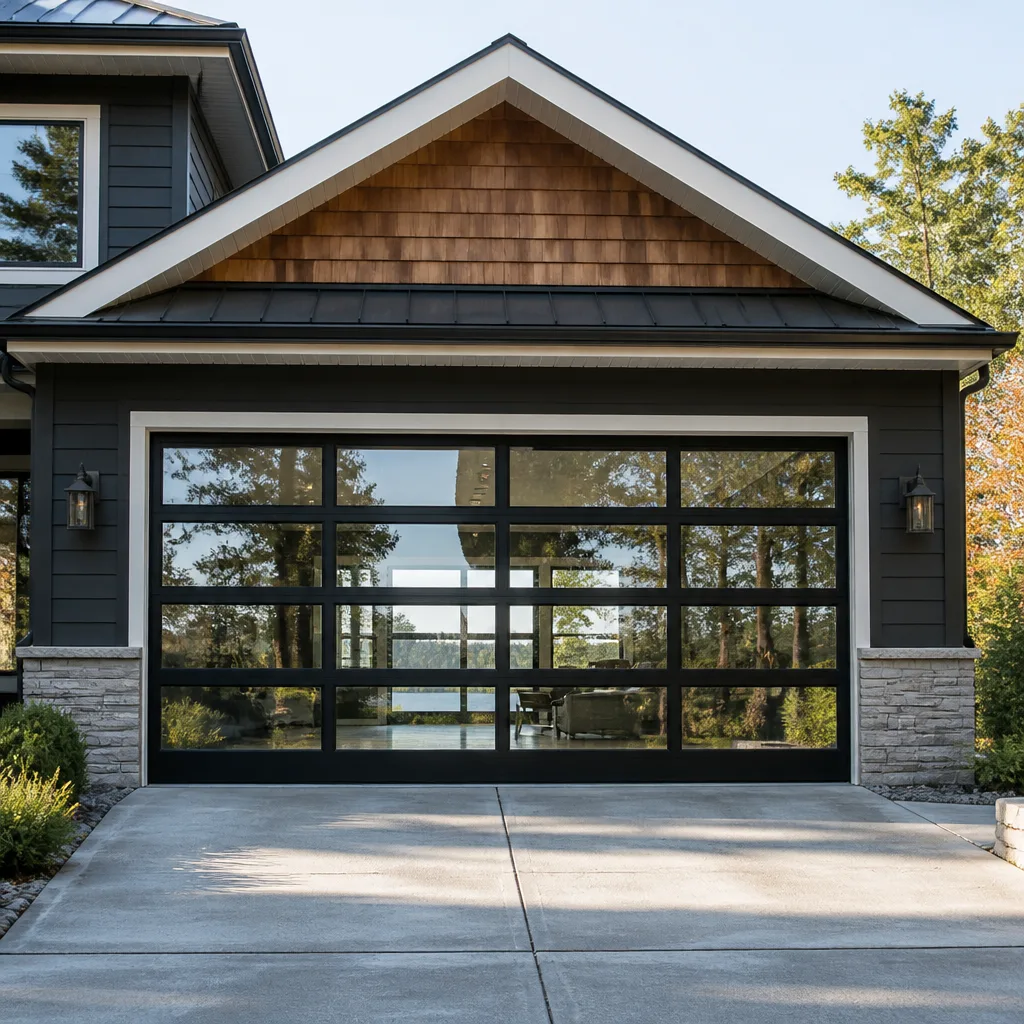 Full-view glass
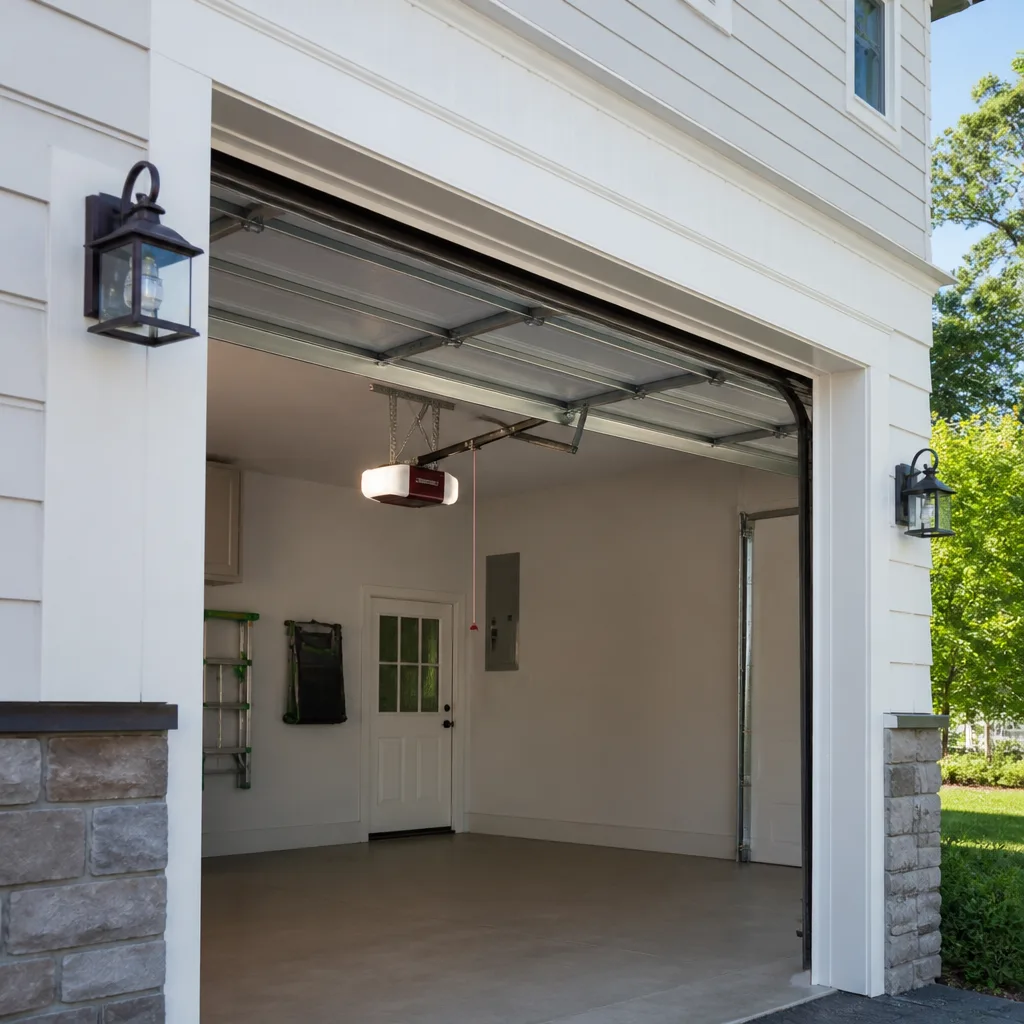 LiftMaster openers
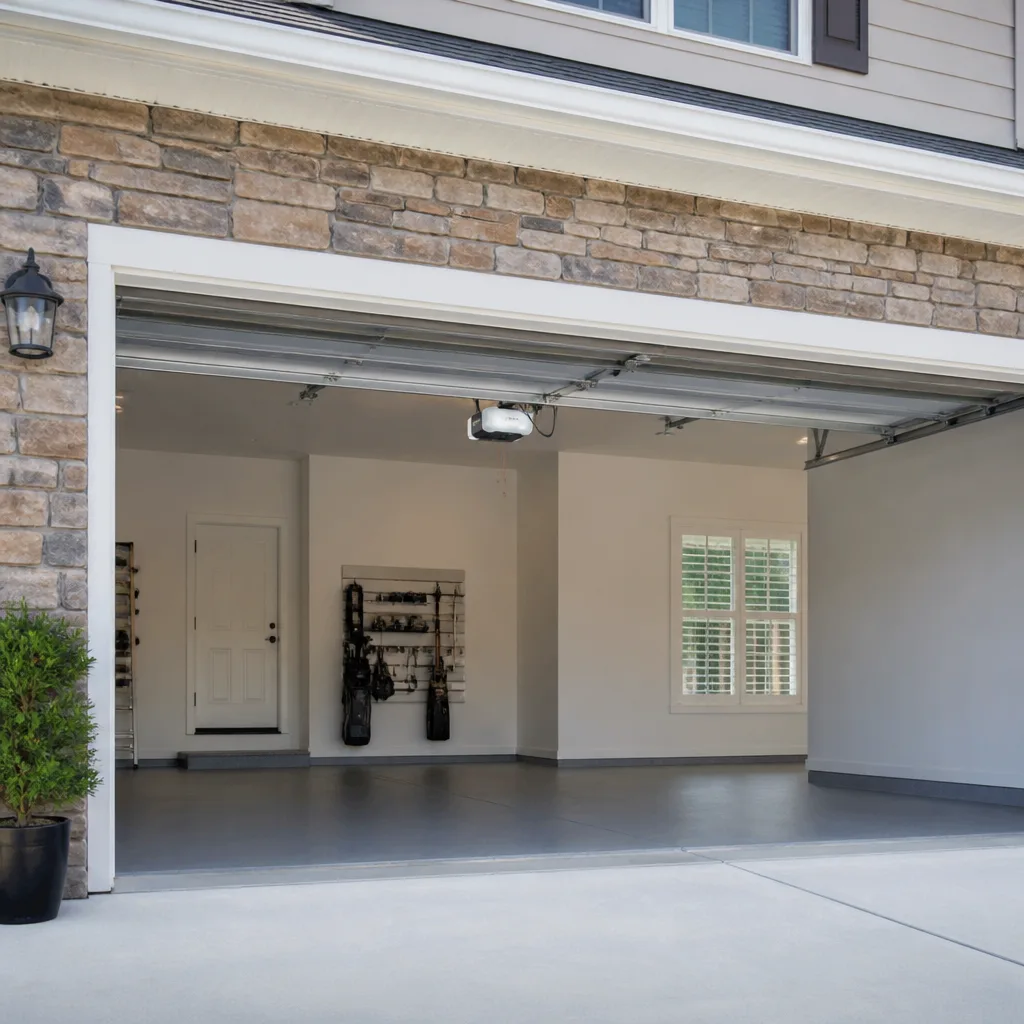 Chamberlain openers
Full 25-point door and opener safety check with every visit - springs, cables, rollers, tracks, and your LiftMaster or Chamberlain opener included
You get a price before we start. It does not change when the pro arrives.
Get your free estimateSeasonal Garage Door Care for Clear Lake: Year-Round Homeowner’s Guide
Every fall, search traffic for “winterize your garage door” climbs across the country, and plenty of Clear Lake homeowners follow that advice without thinking twice. Here’s the problem: it’s mostly written for places with hard freezes and heavy snow. Clear Lake’s garage doors don’t fail in January. They fail in July, after months of heat and humidity have quietly worn down springs, seals, and opener boards. The season that actually destroys a Clear Lake garage door arrives in April, when most people still have time to prevent it. This guide lays out a Gulf Coast seasonal calendar built around what really happens here, from hurricane-season prep through summer heat stress and fall recovery.
Quick Answer
In Clear Lake, the highest-risk season for a garage door is summer, not winter. Extreme heat relaxes torsion spring tension, sustained humidity corrodes opener circuit boards, and hurricane season tests every seal and brace between June and November. The right care rhythm is a pre-season inspection in April and May, monthly checks through the summer, and a full hardware review in the fall after storm season passes.
Styles & brands we work with
- Raised-panel steel
- Carriage house
- Modern flush
- Full-view glass
- LiftMaster openers
- Chamberlain openers
Table of Contents
- Why Clear Lake’s Seasonal Calendar Is Different
- Pre-Hurricane Season Checklist (April and May)
- How Summer Heat Changes Your Torsion Springs
- Protecting Opener Circuit Boards from Humidity
- Fall and Winter Care in a Mild Climate
- Storm Prep vs. Storm Recovery
- A Monthly Maintenance Rhythm
- What You Can Check and What You Shouldn’t Touch
Why Clear Lake’s Seasonal Calendar Is Different
Most garage door maintenance guides assume four distinct seasons with a cold, dry winter as the main stressor. Clear Lake doesn’t work that way. Winters here are mild enough that a garage door rarely sees the kind of cold that stiffens grease or snaps a spring, and the verified local conditions don’t call for snow or freeze-thaw cycles. What Clear Lake does have is a long, hot, humid stretch from late spring through early fall, plus a hurricane season that runs for roughly half the year.
That combination shifts the entire maintenance priority list. In a northern climate, the winter checklist dominates: weatherstripping against cold, keeping the door free of ice, protecting the bottom seal from frozen ground. In Clear Lake, the same checklist items still exist, but they’re aimed at heat, moisture, and wind instead. The bottom seal matters because it keeps humid air and pests out of the garage, not because ice will tear it apart. The springs matter because heat changes their tension, not because cold makes them brittle.
What this means practically is that the most valuable time to look at your garage door in Clear Lake is April and May, before the worst of the heat and before hurricane season ramps up. By July, you’re already reacting to problems. By October, you’re cleaning up after them. The homeowner who spends thirty minutes on the door in early spring has a much easier year than the one who starts paying attention when something stops working.
It also helps to know what’s actually in your garage. Doors and openers from brands like Clopay, Amarr, Wayne Dalton, and Craftsman each have their own hardware, seals, and opener logic. Knowing the brand lets you follow the manufacturer’s guidance for that specific system rather than a generic list. If you’re not sure what you have, the nameplate on the opener and the manufacturer’s label on the door panels are the place to look.
Pre-Hurricane Season Checklist (April and May)
Hurricane season in the Clear Lake area runs from June through November, which means April and May are the last comfortable window to find and fix wind-related weaknesses before storm season starts. A garage door is the largest opening in most homes, and a door that’s out of balance, has a failing bottom seal, or lacks working wind bracing is the weak link when a named storm approaches.
Here’s the pre-season checklist we recommend working through each spring:
- Inspect the wind bracing. Many Clear Lake doors are fitted with horizontal reinforcement struts across the panels. Look for bent, loose, or missing struts and any fasteners that have pulled free. If you don’t see any reinforcement, ask whether your door model needs it for your area’s wind requirements; your city’s building department can confirm what applies locally.
- Check the bottom seal. The rubber seal along the bottom edge should sit flush against the floor with no gaps, cracks, or flattened sections. A worn seal lets wind-driven rain and humid air into the garage, and once water reaches the door’s interior hardware, corrosion starts.
- Test the emergency disconnect. With the door closed, pull the red release handle on the opener trolley, then lift the door by hand. It should move smoothly and stay partially open when you let go halfway. If it drops, the springs or balance are off. Reconnect by pushing the trolley back toward the opener until it clicks.
- Run the safety reverse test. Place a solid object like a roll of paper towels under the closing door. It should reverse on contact. If it doesn’t, the opener’s travel and force limits need attention before storm season, when you may need to trust that safety feature in a hurry.
- Look at the door’s overall balance. Disconnect the opener and lift the door halfway. It should stay put. A door that drifts down is telling you the spring tension has already shifted.
None of these checks require tools or climbing. They’re observations and simple tests. What they catch are the problems that turn into storm damage or a stuck door on the morning you most need the garage to work. If you find something that needs repair, getting it done in May is far easier than scheduling it after a storm has moved through the area.
If your door needs new hardware, reinforcement, or a full replacement before storm season, professional garage door installation is a job to schedule early. New doors are measured, ordered, and fitted on a timeline, so spring is the right time to start that conversation.
How Summer Heat Changes Your Torsion Springs
If there’s one thing Clear Lake homeowners notice every summer, it’s this: the garage door that balanced perfectly in January suddenly feels heavy by July. Nothing broke. The spring tension changed because the metal expanded in the heat. Torsion springs hold the door’s full weight in balance, and they’re calibrated to a specific tension at a specific temperature. When summer heat stretches the metal slightly, the door loses some of that balance.
That’s why a door that once lifted easily starts dragging, and why some openers begin straining or stopping halfway in July and August. The opener isn’t necessarily failing. It’s working harder than it should because the springs are no longer doing their share. Left alone, the opener motor and gear assembly wear faster, and the springs themselves take on uneven stress.
This matters because springs are one of the most dangerous components in any garage door system. A torsion spring is under heavy tension at all times, and it can release that energy suddenly if it’s adjusted incorrectly or handled without the right tools. That’s why we treat spring repair as its own dedicated service rather than a general handyman job, and why we tell homeowners plainly: the routine checks are yours, but spring adjustment and replacement belong to a trained technician.
What you can do in summer is watch for the signals:
- The door feels heavier when you lift it by hand.
- The opener strains, hesitates, or reverses partway up.
- You hear a sharp popping or snapping sound from the spring area.
- The door hangs crooked, with one side higher than the other.
- The springs look visibly stretched or show gaps in the coils.
Any of those point to a tension problem that our team can correct with proper gauges and safe procedure. Our technicians have up to 9 years of experience, and spring work is a routine part of what we do. Cooling weather won’t fix a spring that’s already out of calibration, so don’t wait for fall if you notice these signs.
Protecting Opener Circuit Boards from Humidity
Between June and September, Clear Lake’s humidity stays high for weeks at a stretch, and a garage is often the most humid room in the house. Warm, moist air drifts in, condenses on cool metal surfaces, and settles into the tight spaces where opener electronics live. The result, over a few seasons, is corrosion on the opener’s circuit board and solder points. That corrosion is a common reason an opener starts acting erratically, losing its memory, or refusing to respond to the remote.
You can reduce the risk with a few practical habits:
- Seal the garage envelope. A failed bottom seal or gaps around the door frame let humidity roll in every day. Replacing a worn seal is one of the most effective humidity controls you have.
- Keep the opener’s housing clear. Don’t stack boxes or hang items against the opener unit. Air needs to circulate around it so condensation can dry.
- Watch the ceiling and rails. Visible moisture or rust on the opener’s metal rail is an early sign that humidity is reaching the electronics.
- Test the wall control and remotes regularly. If the opener forgets its travel limits or stops responding to a remote that used to work, the board may already be showing corrosion. That’s the point to call for a diagnosis rather than keep resetting it.
When an opener does need attention, knowing the brand helps. A Clopay door paired with a LiftMaster or Chamberlain opener follows different troubleshooting logic than a Wayne Dalton or Genie setup, and a technician who works on the specific system you own can often find the cause on the first visit. That’s a big part of why we focus on the eight brands most often installed in U.S. homes, including LiftMaster, Chamberlain, Genie, and Clopay. If your opener has reached the end of its life, garage door opener repair often restores function faster than a full replacement, and a technician can tell you which path makes sense.
Fall and Winter Care in a Mild Climate
When the northern “winterize your garage door” articles surface in your feed, remember that most of their advice was written for climates with deep freezes. Clear Lake winters are mild, and the verified local conditions here don’t call for snow, ice dams, or freeze protection. That means several common winter tasks simply don’t apply to you. What does apply is a quieter fall reset after a hard summer and hurricane season.
Northern advice you can safely ignore in Clear Lake:
- Snow-load reinforcement and roof snow concerns.
- Keeping the bottom seal clear of ice and frozen ground.
- Cold-weather grease changes.
- Freeze prevention for door hardware and tracks.
What actually matters in fall:
- Recheck spring balance. As temperatures cool, springs settle back toward their winter calibration, but if summer stress has already weakened them, the door may still feel heavy or drift. A balance check in October catches that.
- Inspect for rust and corrosion. Months of humidity can leave light rust on hinges, rollers, and springs. Left alone, it accelerates wear on the moving parts.
- Clean and lubricate. A garage door has several moving points that benefit from a light application of the lubricant the manufacturer recommends for that hardware. This is maintenance, not repair, and it makes everything quieter and easier on the opener.
- Look over the seals again. After a summer of heat and possible storms, the bottom seal and the seals around the door frame may show wear. Fall is a good time to replace them before the next spring.
- Test the safety reverse one more time. The opener’s safety features should be verified every few months, not only before storm season.
Winter itself is the calmest season for garage door care in Clear Lake. Use it to plan any larger work, like replacing a door that’s shown repeated problems, and to get ahead of what the next spring will need.
Storm Prep vs. Storm Recovery
Storm prep and storm recovery are two different jobs, and confusing them leads to skipped steps. Prep happens before a named storm is forecast. Recovery happens after it has passed and you’re making sure the door is safe to operate again. Both matter in Clear Lake, where a single hurricane season can bring several near-misses and one direct hit.
Before the storm
- Close and lock the door, and confirm the manual lock or slide bolt is engaged if your door has one.
- Check that the emergency disconnect handle is accessible and not tangled in anything stored nearby.
- Move anything loose in the garage away from the door and tracks.
- Confirm the bottom seal sits flush. A gap becomes a water entry point in driving rain.
- Take a photo of the door and its springs. That’s a useful reference for any repair or claim afterward.
After the storm
- Don’t force the door. If it won’t move freely by hand, stop. A storm can shift the tracks or damage the springs, and forcing the door can turn a repair into a replacement.
- Look for bent or shifted tracks. Tracks should be straight and parallel. Any visible bend or separation from the wall is a stop-and-call situation.
- Inspect the panels. Dented or creased panels can affect how the door seals and rolls. On some doors, a damaged panel can be replaced on its own.
- Check for water intrusion. If water got into the garage, dry the opener and its electrical connections before testing anything. Moisture plus electricity is a hazard.
- Test the opener only after the door moves freely by hand. If the door is balanced and the tracks are straight, then run the opener and watch for smooth travel.
If anything looks off, professional garage door repair is the right call. Storm damage often includes hidden problems with springs and cables that aren’t safe to inspect closely, let alone adjust. It’s also worth contacting your insurer, since we can work with your insurer to document what a technician finds during a repair visit.
A Monthly Maintenance Rhythm
The best seasonal care plan in Clear Lake is really a monthly one. Most of what protects a garage door takes a few minutes, and doing it consistently beats a single deep clean once a year. Here’s a simple rhythm that keeps a Clear Lake door in working order through every season:
- Month one (early spring, before heat): Balance check, spring observation, seal inspection, wind bracing check, emergency disconnect test.
- Month two: Lubricate moving parts with the manufacturer-recommended product, tighten visible fasteners on hinges, and check the safety reverse.
- Monthly through summer: Listen for grinds and pops, watch for opener hesitation, test the remotes non-contact, and check for visible moisture or rust on the opener rail.
- Before and after each storm: Run the storm prep and recovery steps above.
- Fall: Full hardware review, seal replacement if needed, and a fresh balance check as temperatures cool.
- Winter: Light monthly checks and planning for any larger work the following spring.
This rhythm covers the same tasks a professional would address during a maintenance visit. The difference is scope: homeowners can safely do the observations and lubrication, while the spring, cable, and hardware adjustments belong to a trained technician who has the gauges and the tools to do them safely.
What You Can Check and What You Shouldn’t Touch
Clear Lake homeowners often ask us which garage door tasks are safe to handle themselves. The answer falls into two clear buckets.
Safe for you to do: visual inspections of the door panels, seals, tracks, and opener housing, lubrication of hinges and rollers with the recommended product, testing the safety reverse and emergency disconnect, cleaning the door surface, and clearing clutter from around the tracks and opener.
Not safe to do yourself: anything involving the torsion springs, the cables, or the door’s lifting hardware. Those components are under tension, and a mistake can cause serious injury. This is the part of garage door maintenance where a trained technician’s experience makes the difference. Spring adjustment is precise, and it needs proper gauges and a controlled procedure. If a spring has snapped or the cables have loosened, don’t run the opener or try to move the door; call for service and let the professional handle it.
We mention this plainly because it’s the single most important safety point in this guide. Our technicians have up to 9 years of experience with spring repair, and it’s still a job they approach with caution and proper equipment every time. That’s the standard for this work.
Common Mistakes to Avoid
- Following northern winter advice in April. Clear Lake’s worst garage door season is summer, not winter. Prepping for cold in April means skipping the heat, humidity, and hurricane checks that actually matter here.
- Ignoring a door that feels heavy in July. That heaviness is spring tension shifting in the heat. Waiting for fall lets the opener and springs take unnecessary wear.
- Lubricating the tracks. Grease on the tracks collects dust and grit. The rollers and hinges are what need lubricant, and the tracks should be cleaned, not greased. A generic advice article often gets this wrong.
- Skipping the emergency disconnect test. That little red handle is the thing you’ll want working if the opener fails during a storm. Test it in the spring, not after you need it.
- Overlooking the bottom seal. In Clear Lake’s humidity, a worn bottom seal means moisture enters the garage year round and eventually reaches the hardware. Replacing it is a simple fix that prevents bigger problems.
- Assuming a broken opener needs replacing. Many openers that act “broken” only need repair. Diagnosing the brand-specific issue first usually saves money.
- Forcing a door that’s stuck after a storm. A stuck door usually has a bent track or a spring problem. Forcing it turns a repair into a replacement.
See the difference
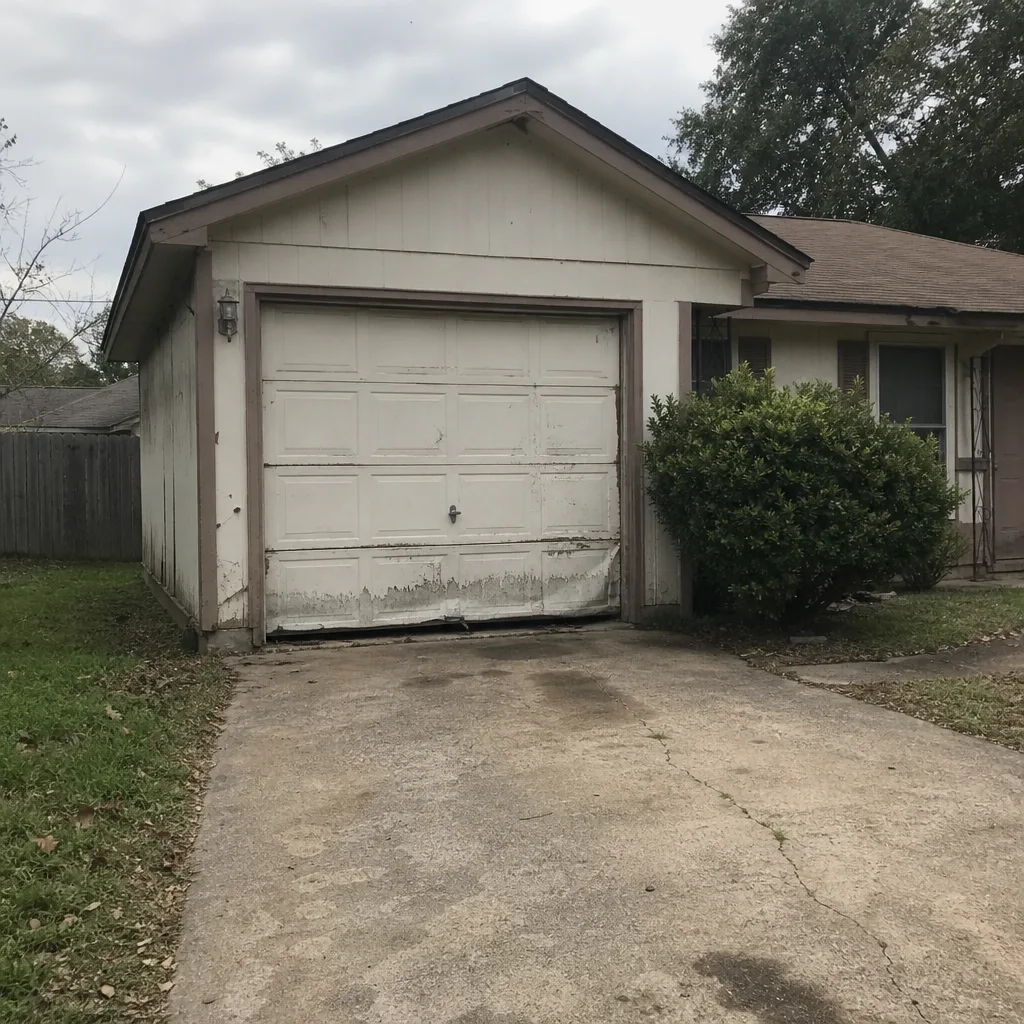 Before
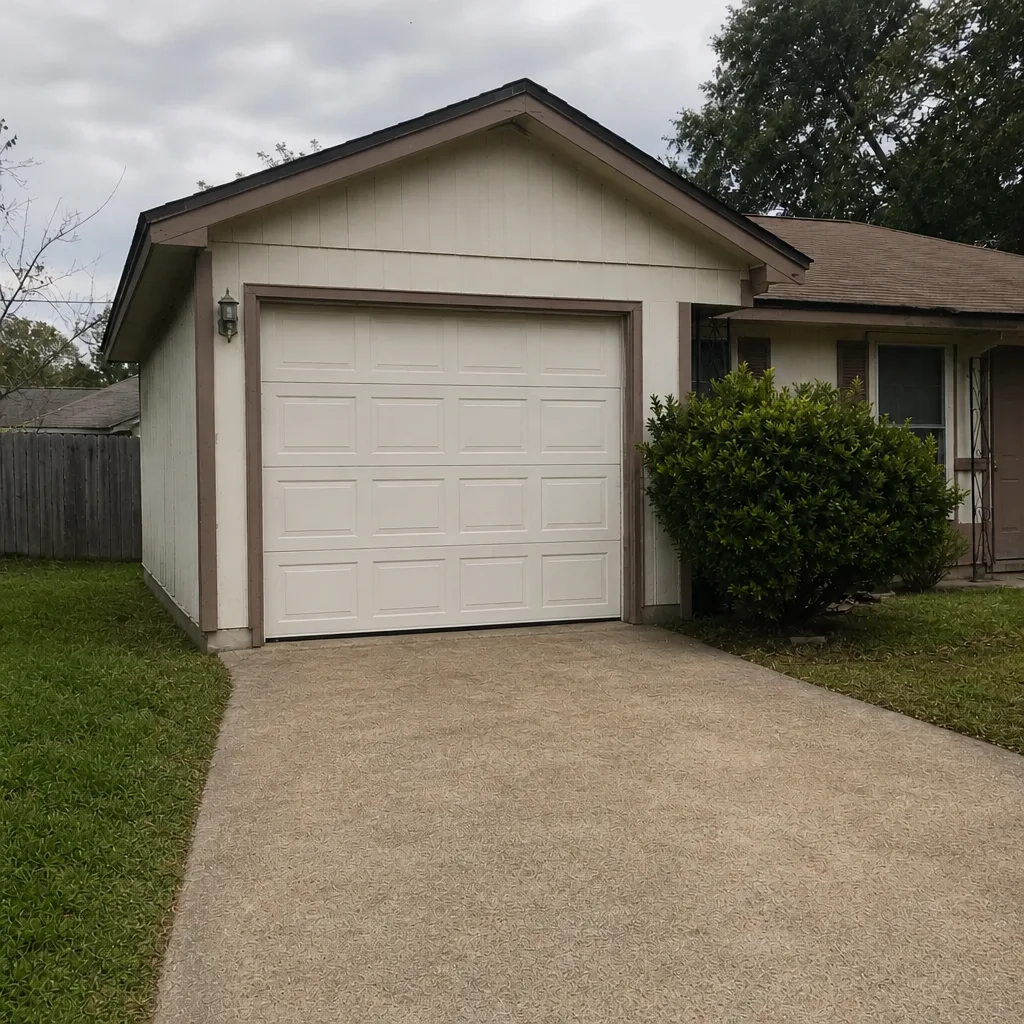 After
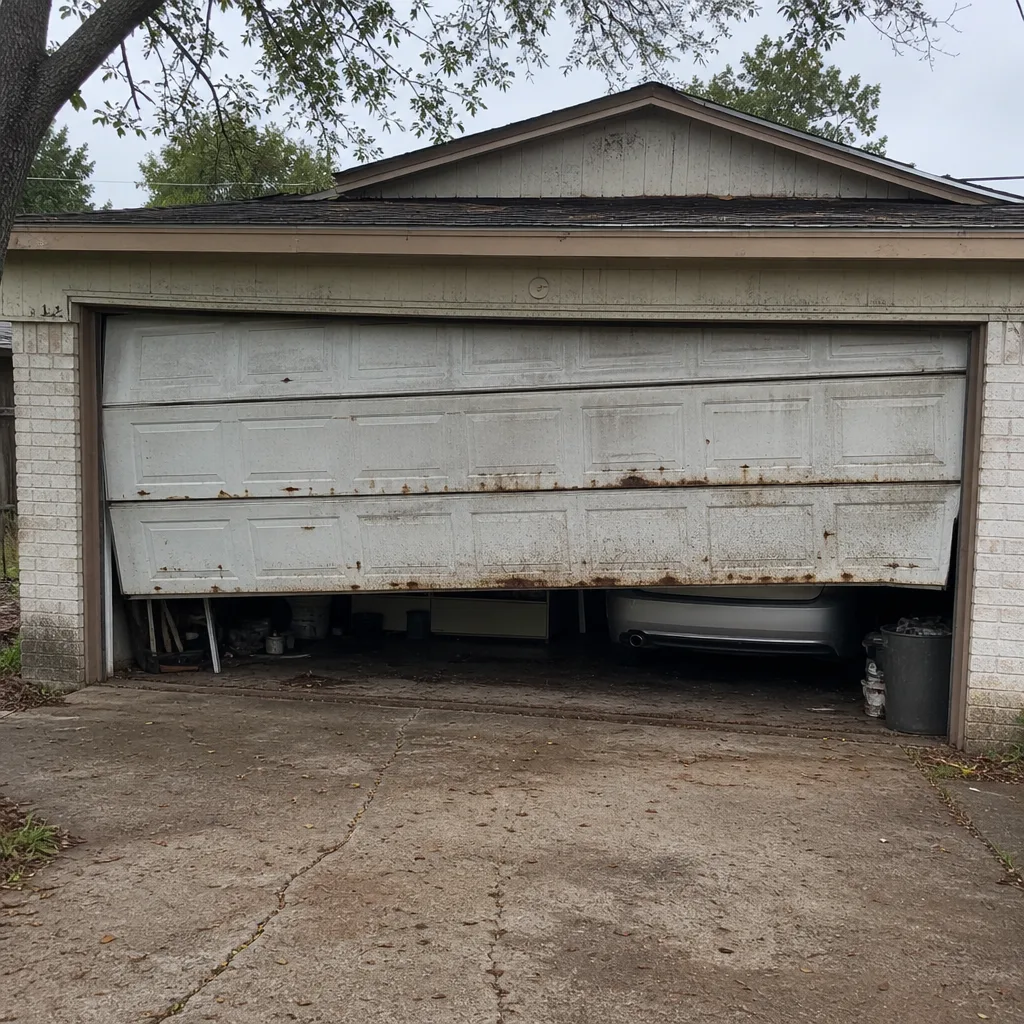 Before
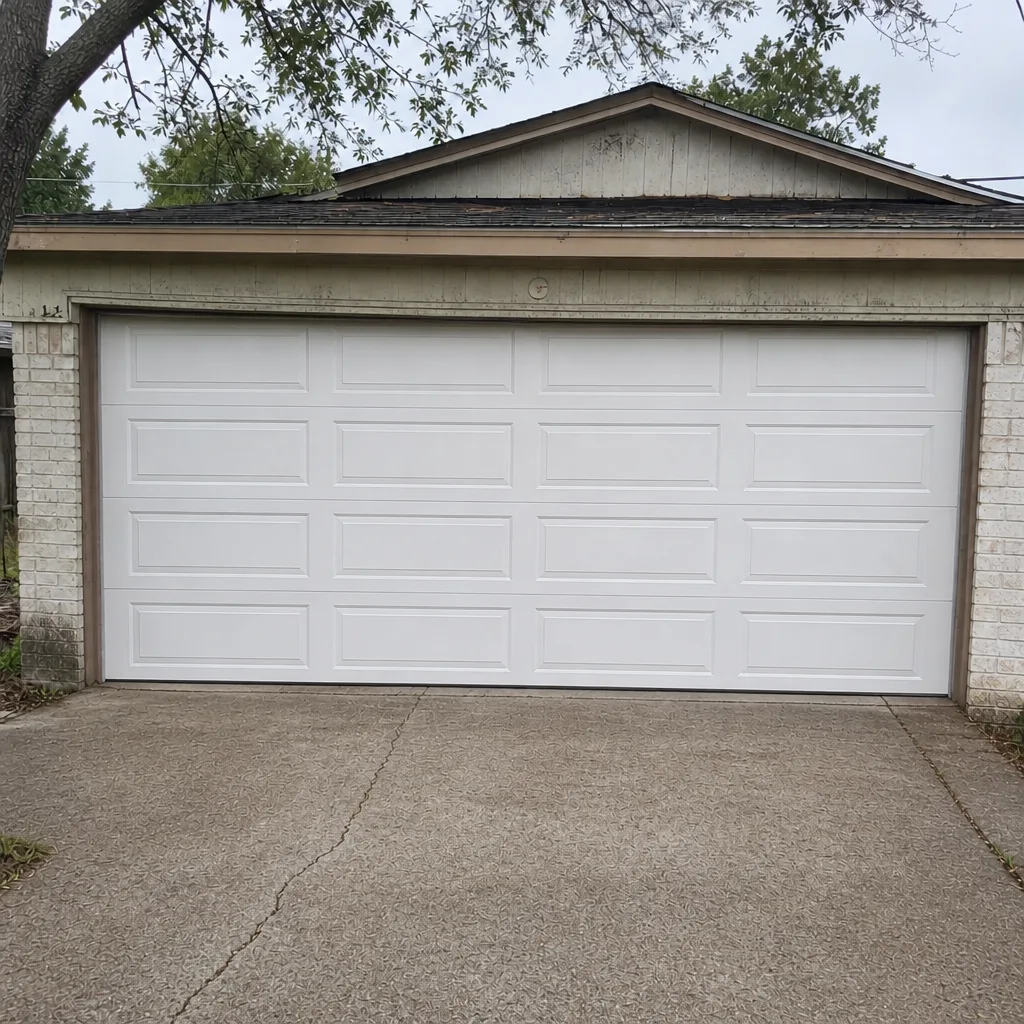 After
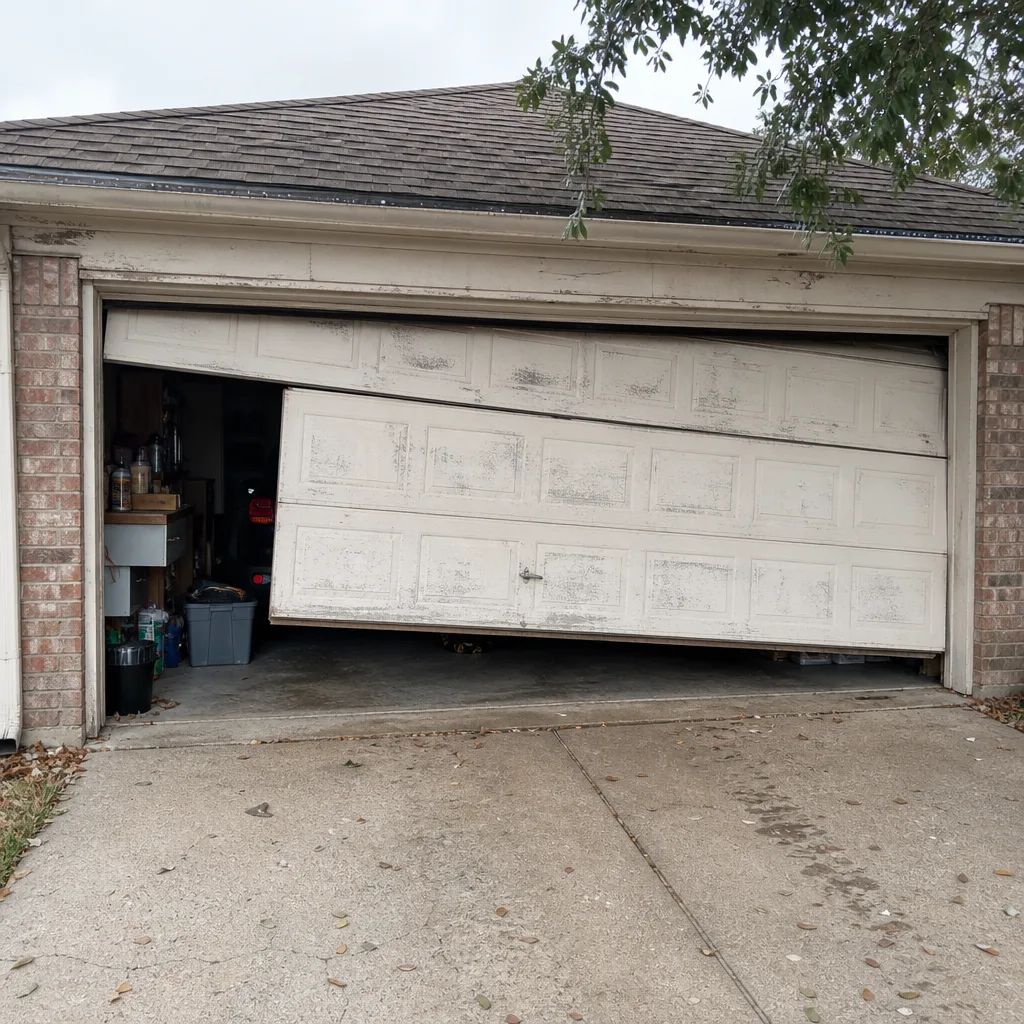 Before
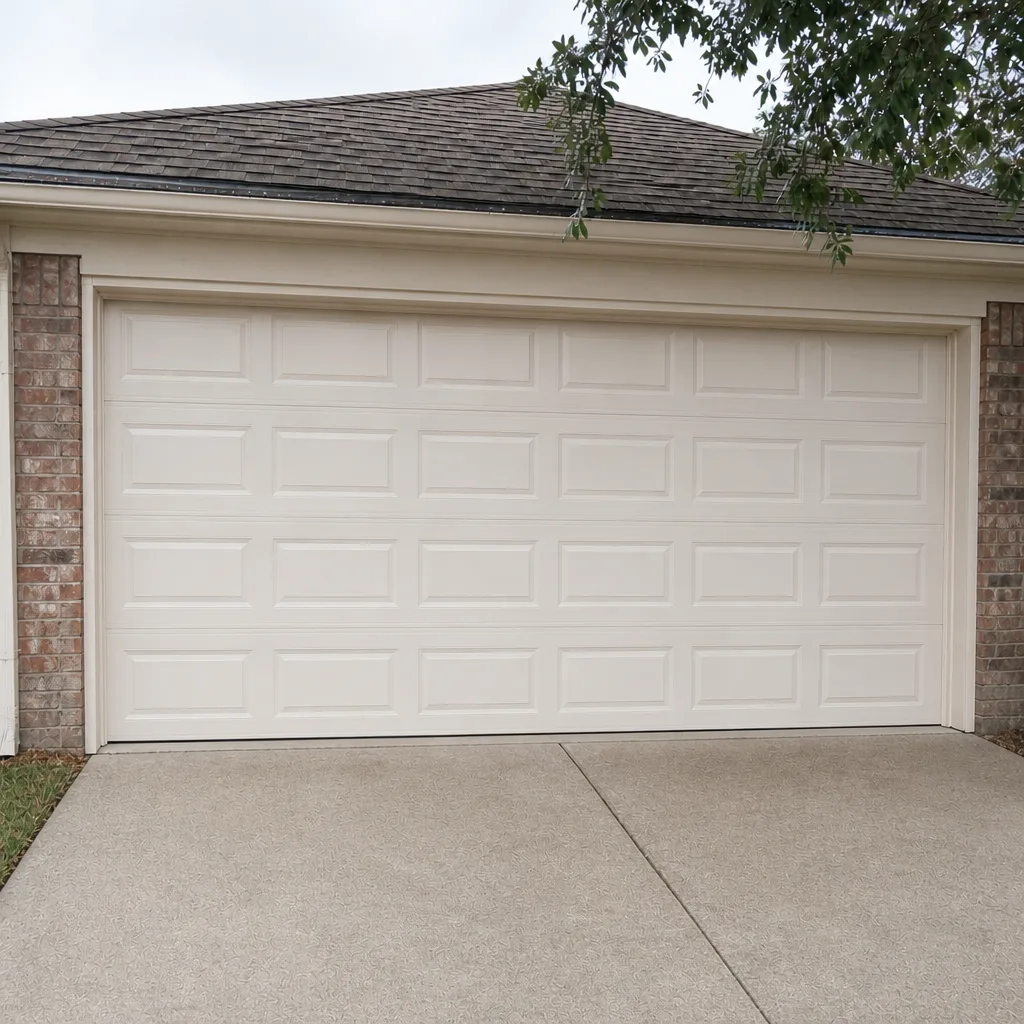 After
When to Call a Professional
Some garage door problems you can spot in a walk-by, and some need a technician with the right tools. Call a professional if the door feels heavy or drifts when lifted by hand, if the opener strains, hesitates, or reverses partway, if you hear popping or snapping from the spring area, if the door hangs crooked, if a storm has bent tracks or creased panels, or if the opener’s board shows signs of humidity corrosion. Those are the scenarios where continued use can turn a small repair into a bigger one. Clear Lake Garage Door Repair offers free estimates in Clear Lake, and our team works on the most commonly installed brands, including LiftMaster, Chamberlain, Genie, and Clopay. We can diagnose the issue on-site and quote the price before any work starts. Call (833) 508-9162.
Frequently Asked Questions
Late April or early May, before heat and hurricane season ramp up. That’s when a balance check, seal inspection, and wind bracing check do the most good. A fall check is a useful follow-up after storm season.
Because summer heat expands the torsion springs and changes their tension. The door that balanced in January can start dragging by July, which makes the opener work harder. A technician can recalibrate the spring tension safely.
No, not in the northern sense. Clear Lake winters are mild, and there’s no need for snow-load reinforcement, freeze protection, or cold-weather grease changes. Fall care is mostly a hardware review and rust check. Call (833) 508-9162 if you want a technician to look things over; estimates are free.
Sustained humidity between June and September can corrode the opener’s circuit board. That often shows up as a unit that stops responding to remotes, forgets its settings, or acts erratically. Sealing the garage and keeping the opener’s housing clear of clutter helps; a technician can confirm whether corrosion is the cause.
First, don’t force the door. Look for bent tracks, creased panels, and water intrusion, and test whether the door moves freely by hand. If it doesn’t, or if you see spring damage, stop and call a professional. Call (833) 508-9162 if you need a storm recovery inspection.
No. Torsion springs and cables are under heavy tension and can release suddenly, so adjustment belongs to a trained technician with the right gauges and tools. Our team has up to 9 years of experience with spring repair, and it’s still a job done carefully, with safe equipment. If your door is out of balance, call (833) 508-9162 for an estimate.
The Bottom Line
Clear Lake’s garage door calendar runs opposite the northern one: summer is the stress test, not winter. The work that protects a door here happens in April and May, before heat and hurricanes arrive. From there it’s a simple monthly rhythm of observations, lubrication, and seal checks, plus a storm prep and recovery routine each season. The tasks you can safely do yourself are the ones that keep small issues from becoming big ones. Springs, cables, and balance belong to a technician. Follow that plan and your garage door will be far more reliable, no matter what the season brings.
If you’d rather have a trained eye review your door before the next season turns, or you’ve noticed any of the warning signs in this guide, we’re here to help. Clear Lake Garage Door Repair offers free estimates, works on the most common brands, and quotes the price before any work starts. Call (833) 508-9162 for a free estimate. You can also start by visiting Clear Lake Garage Door Repair to see the full range of services.
Written by the team at Clear Lake Garage Door Repair.